
Congratulations to all of these beautiful and deserving children who have now found committed adoptive families through Reece’s Rainbow!
To follow along with each family’s adoption journey click here.
All of these children are in various stages of the adoption process. Once they are home, they will be removed from this page. Your prayers for these children and their new families are greatly appreciated!
Evalina

Evalina is looking for a forever family. She is a happy and playful child, with good behavior. She does suffer from a variety of developmental delays, specifically in her motor skills and communication skills. Evalina smiles often and likes to be around people.
Samson #


Update Nov 2024: Samson was recently moved from a large orphanage to a small group home for children with disabilities. He loves attention and responds with joy with staff interacts with him. He is described as a calm and radiant child.
Declan


There is a $1,000 agency fee reduction for Declan’s adoption with a specific agency. Additional agency fee reductions may be available based on the adoptive family’s circumstances.
VIDEOS:
https://vimeo.com/maaspecialkids/maa-declan10
https://vimeo.com/maaspecialkids/maa-declan11
Password: Adoptmaa
Josie #


$3,898.50 has been donated towards the cost of my adoption!
Josie currently lives in a group home. She is very small for her age. She can turn from her back to her stomach. She tracks objects with her eyes and reacts with smiles and positive movements/expressions when an adult interact with her.
Update 9/2024:
From a staff member who visited her: “I see some progress from the last time I visited her in October of 2023. She can hold the bottle by herself while eating or drinking from it. She can keep herself upright for quite a long time. She is trying to say syllables. The little girl is an extremely gentle, fragile creature who needs lots of love and cuddles (which are definitely in short supply at the moment), activities and the chance to find her forever family.”
Eloise

$1,300.00 has been donated towards the cost of my adoption!
Eloise’s ability to communicate her needs and emotions through gestures and sounds demonstrates her keen self-awareness, and her empathetic nature is evident when she comforts her loved ones. Though faced with medical challenges, Eloise has proven to be remarkably resilient.
VIDEOS:
https://vimeo.com/
https://vimeo.com/
https://vimeo.com/
https://vimeo.com/
https://vimeo.com/
https://vimeo.com/
Password: Adoptmaa
Agency fee reductions may be available based on the adoptive family’s circumstances.
Gary, Kevin, Max & Faith #
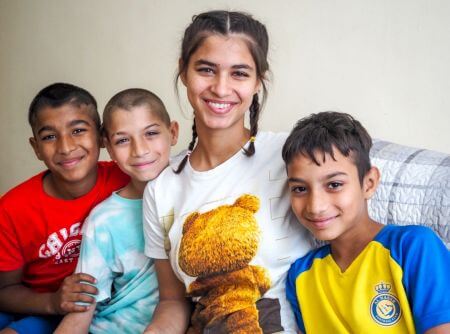
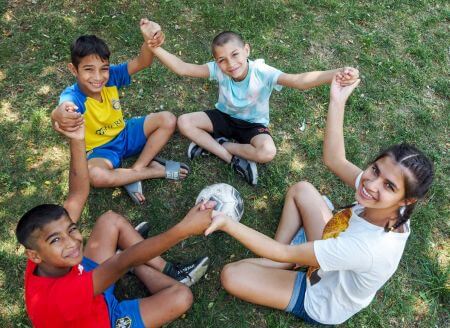
Grant funds depend on available funding; the link above, shows the current available amount!
To inquire about this child, email childinquiry@reecesrainbow.org ***
Faith is already 16 years old, and her only chance to be adopted is with her brothers. She has typical physical, emotional, and neuropsychological development for her age and no special needs. She has a positive mood, shows respect for authority, and approaches her schoolwork with seriousness and diligence. Faith enjoys folklore dance, creative activities, and community center programs. Peer relationships are increasingly important to her, and she values loyalty and trust in friendships. She prefers group and role-play activities and enjoys board games. Diagnosis – history of trauma.
Max has normal physical, emotional, and neuropsychological development and no special needs. He is energetic, enjoys outdoor and dynamic activities, and maintains a mostly positive mood. Max has made strong progress in emotional self-regulation and does not display aggressive behavior. He listens attentively to instructions, respects authority, and demonstrates diligence and potential in his academic work.
Kevin is 11, and has has typical development for his age and no special needs. He is generally optimistic and emotionally stable. His teacher notes strong potential and a responsible attitude toward school tasks. Kevin enjoys folklore dance, creative activities, and community events. He shows respect toward adults, follows rules, and enjoys board games that build logical thinking, as well as imaginative role-play games.
Gary is the youngest, at 10 years old. He has normal physical and neuropsychological development but has special educational needs and learning difficulties. He receives support from specialists and follows an individualized curriculum. Gary’s emotional fluctuations are age-appropriate, with periods of enthusiasm alternating with brief withdrawal during stress or frustration. He shows no aggressive behavior, respects authority, and seeks connection with peers. He enjoys group sports and logic-based board games. Gary is independent in self-care, follows hygiene routines, and sleeps well.
Thea #


Currently, the child has no apparent epileptic seizures, and the EEG shows no epileptiform changes. Remedial nutrition with KetoCal is recommended; reduction of carbohydrate intake. A new hospitalization is forthcoming to start a ketogenic diet with KetoCal.
Anne #


Ember

Significant progress in her skills has been observed in the child’s functioning. She is active, cheerful, and interested in her surroundings. Her gross motor skills require further intensive stimulation. The girl moves dynamically in a crawling position. She is becoming more stable when standing upright, trying to climb, and taking her first steps with the support of her caregiver. She can move sideways with support, turn around with her back and maintain her position by leaning against a stable surface. She sits independently, but in an incorrect W-shaped or asymmetrical position.
She successfully manipulates toys, grabs and pulls objects, and looks at them. Her orientation is preserved. The child moves her gaze from object to object, looks for the source of sound, and follows the movement of people and objects. She focuses on illustrations in children’s books. She looks for objects that disappear from view.
Her communication skills continue to progress. The girl actively vocalizes and syllabifies, using her own speech more and more clearly. She does not speak, but understands repeated words, mainly those with emotional connotations. She displays appropriate social behavior. She responds to smiles and voices with smiles and vocalizations. She is responsive to changes in facial expressions. She listens to what is said and responds to her name. She willingly cuddles with her caregiver, initiates contact with adults she knows, and maintains an appropriate distance from strangers, as is appropriate for her age.
She does not use pointing gestures, but she does use gestures to express emotions and imitates clapping. She is interested in her reflection in the mirror and laughs. She is reactive to the presence of others. The girl actively seeks attention and initiates interaction with people around her. She plays with her peers. She maintains a daily rhythm and has a normal appetite. She drinks from a cup, is fed with a spoon, and tries to eat solid foods on her own.
Update November 6, 2025: Little Ember started walking today!
Tio
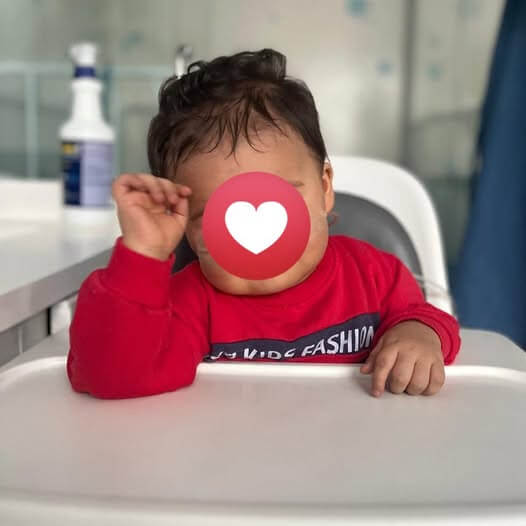
Here is what is said about me:
Tio was born 4 weeks prematurely with a complex congenital heart condition, including pulmonary atresia and Tetralogy of Fallot. He has undergone multiple cardiac surgeries, including right ventricle-to-pulmonary artery conduit placement and angioplasty with stent placement. He has experienced postoperative complications, including surgical site infection and respiratory infections, all of which were medically managed. He currently requires continuous oxygen support via nasal cannula (1 liter per minute) and takes cardiac medications including furosemide, spironolactone, and low-dose aspirin. He remains under close pediatric and cardiology follow-up, with additional evaluations pending in genetics and general pediatrics.
Despite his significant medical history, Tio is described as a calm, affectionate, and resilient child. He responds warmly to caregivers, makes eye contact, smiles socially, and enjoys music, light-up toys, and physical closeness. He demonstrates curiosity about his environment and enjoys sensory exploration.
Developmentally, Tio presents global developmental delay secondary to his complex medical condition and prolonged hospitalizations. He can sit independently, roll, assume a crawling position, and manipulate objects with his hands. His fine motor skills are emerging, though slightly below expectations. Expressively, he babbles and produces repetitive syllables, though language development is delayed for his age. He receives ongoing interdisciplinary services including physical therapy, speech therapy, and psychological support. With continued therapeutic intervention and a stable family environment, he is expected to continue progressing.
Nutritionally, Tio is stable and well nourished, with adequate weight and height for age. His vaccination schedule is up to date. He tolerates solid foods well and maintains appropriate daily intake. Emotionally and socially, Tio forms attachments and responds positively to consistent caregiving. He expresses joy through smiles and gestures, communicates needs through crying and vocalization, and is receptive to affection. He has shown increasing emotional security and regulation within the structured environment of his current placement.
Tio would benefit from an adoptive family that is emotionally sensitive, patient, and well-prepared to manage complex medical needs. His family should be committed to ongoing cardiology care, therapeutic follow-up, and providing structured routines with nurturing support. A family with strong advocacy skills and access to pediatric cardiology services will be essential to meet his ongoing medical needs. Most importantly, he needs a loving, stable home that will encourage his development at his own pace and celebrate his resilience and strengths.
Tio is a gentle, sweet, and determined child whose smile reflects his strong will to live and connect. With proper medical care and the unconditional love of a permanent family, he has significant potential to thrive.
Alina

At the age of 21 months old, Alina was admitted to the hospital with leukemia. Fortunately, her treatments worked and her leukemia was cured. However, Alina also has Down Syndrome and her mother could not care for her. She is currently not taking any medication. She drinks a lot of water during the day, which led to a medical evaluation as to why she drinks so much, but nothing was found.
As is the case with many children with Down Syndrome, Alina loves to give and receive affection. She is enrolled in an inclusive academic program where she attends sixth grade. She interacts in a positive way with her peers and participates in class. Alina cannot say the days of the week, but she knows what she is supposed to do daily. Even though Alina needs to be told what to do she somehow finds out the way to solve problems on her own.
Alina is able to use the restroom and she has been walking since the age of 3. She has been diagnosed with muscular hypotonia, for which she goes to physical, occupational, speech, and psychological therapies. Her fine motor skills are continuing to develop, and Alina cannot fully write or read yet. A special academic curriculum has been designed for her for some subjects. Alina said her first words when she was 4 years old. She has a cyst in her brain and is monitored periodically. The foster mother stated that the child was able to talk and most of her words were correctly pronounced but after having surgery on her tonsils in 2018, there has been a setback on her language skills. However, her language comprehension is the same.
Alina loves to play games on a cell phone, and she is a great helper around the house. She is a very talkative girl who loves to wear dresses. She also likes to color and draw. She easily makes friends and loves to interact with peers. It has been observed that many times, Alina has great leadership skills when it comes to organizing games among her peers. She can verbally express (in a limited way) her feelings and emotions. She interacts in a positive way with adults, peers, younger children, and animals. Alina has learned to be independent in many ways.
Felix

Rose #


This grant is offered by Reece’s Rainbow, for children in this specific country. Grant funds are dependent on available funding. For more information, email childinquiry@reecesrainbow.org ***
Wyatt


$3,080.00 has been donated towards the cost of my adoption!
A therapist works with him weekly. He presents with many neuromuscular deficits that impact his ability to move his arms. He is able to move his left arm a little to touch objects; however, he does not pick up and hold objects yet. Movement is also limited in both legs, with his right leg having less mobility. He is unable to sit, stand or walk. He is able to hold his head up for short periods of time; however, he is making great progress with this. Wyatt is extremely motived during his therapy sessions.
Cognitively, he is extremely aware and currently does very well in school. He knows shapes, colors, some letters and numbers. He can identify them and answer questions using eye gaze with 2 choices. He loves to laugh at kids when they are running around. Sensory materials and adapted activities are helpful in school to further develop his academic abilities.
Woodrow


$5,570.50 has been donated towards the cost of my adoption!
Woodrow loves to eat and gets quite upset if meal time is late. He doesn’t self feed, but eats pureed food by mouth. It can be a messy affair, but he is quite satisfied when he is done. Woodrow drinks some with a sippy cup or water bottle, but also likes to drink from a regular cup if he is feeling particularly thirsty.
Woodrow is not a fan of bath time and tends to move around a lot as he tries to keep his caregiver from bathing him, particularly his face and head. He is very picky about people touching his head – sometimes he likes a good head massage and other times he will duck away from anyone who tries to touch his head at all. He also does not like anyone touching his face, especially to try and wipe it off after a meal or to brush his teeth. The one exception he sometimes makes is for his caregiver to kiss his cheeks and neck, which he occasionally greets with a big smile.
In the past, Woodrow would often cry and thrash inconsolably for long periods at a time no matter what his caregivers tried. Some changes with medications have helped him drastically. He still does not sleep on a regular schedule, but if he’s awake during the night, he is generally calm, sometimes quiet and sometimes “talking” with his little noises.
Woodrow really likes his feet and will often clap them together. He also uses his feet to protect his head which he hits repeatedly for sensory input. Woodrow does not do a lot of purposeful movement with his hands, but often wrings them.
Woodrow goes to physical therapy and attends a special education class every day. He likes to be pushed around in his wheelchair and enjoys going in the swing.
Woodrow is a ticklish guy and will often reward tickles with a smile. While he is not generally a cuddler, he sometimes enjoys being held and cuddled and will lean in to relax.
Progress with Woodrow has been slow, but he is learning and responding. We continue to pray that he would know that he is safe, loved and treasured. We also pray that a brave and bold family would step forward to pursue his adoption. He is worth it.
Elon #


Grant funds depend on available funding; the link above, shows the current available amount!
To inquire about this child, email childinquiry@reecesrainbow.org ***
Zeek #


$3,337.50 has been donated towards the cost of my adoption!
Updated May 2022: Zeek was recently moved from a large orphanage to a small group home, where he’s now receiving more interaction and attention. His language skills have started developing. He can now say several words. He enjoys interacting with staff and responds when he receives attention. He enjoys music.
Saber #


Saber is a sweet little boy. His main diagnoses/conditions are: epilepsy – grand mal seizures. Infantile cerebral palsy – spastic quadriparesis, severe degree; ROP; cataract in the left eye – condition following surgical treatment; brain cysts; hypotrophy; mixed specific disorders of the psychological development; severely impaired general condition, with severe delay in all areas of development. He is fed via nasogastric tube. He needs constant care, active monitoring by a pediatric neurologist, an ophthalmologist and a physiotherapist.
Sweet Saber truly deserves a wonderful family! He expresses emotional conditions through mimics. He understands when an adult is in the room and he looks for him with his gaze. He smiles when someone speaks to him or when he is jested. He does not interact with other children, but individual attention by an adult brings him pleasure which he expresses through smiling.
Please help us find this smiley little boy his forever family!
Alden #

$459.90 has been donated towards the cost of my adoption!
Alden responds positively to teasing and simple games with an adult. Interactions with him are at the level of simple games. He accepts teasing and shows his enjoyment by perking up and expressing positive emotion. He reacts emotionally when he is around other children.
He does not utter meaningful words. He has no established habits and skills for self-care. He is fully cared for by staff. He sleeps and wakes calmly.
Kalvin


Update from December 2020
The boy is active in motor development. He crawls for toys, climbs obstacles, stands up on its own and walks by furniture. He manipulates the toys by tapping one against the other or on the floor, examining them in their hands, shaking them. He moves elements of manipulation boards, notices small details of toys, can press buttons of playing toys. He takes out and puts the blocks in the box. He is interested in the surroundings, explores the available space and actively participates in the proposed games.
Speech development is delayed but progressing. Kalvin reacts to his name, babbles, and responds with vocalizations to the speech addressed to him.
He is an active and social boy. He loves cuddling, tickling and early childhood games. He takes an active part in them, is able to focus on the activity that interests him and shares the field of common attention. He falls asleep on his own and can sleep well through the night.
Compared to the population of children with Down syndrome, Kalvin functions very well. His development is constantly and dynamically progressing, and his active behavior and interest in the environment allow for a positive prognosis of further development. Placing him with a loving family will help with further dynamic development and satisfy his curiosity about the world around him.
Julia

Julia has been diagnosed with autism, speech and developmental delays. Since receiving rehabilitation services at her preschool, she has now met her gross motor skill goals. She has good fine motor skills, including wonderful handwriting for a 5-year-old. Her speech has improved since starting preschool and especially since receiving speech therapy. She can now express her thoughts, wants and needs in complete coherent sentences, and her social skills are improving as well.
Julia was in the same foster home from the time she was 21 months old until September 2024 when her foster mother could no longer care for her due to personal reasons unrelated to Julia. Julia was used to going to respite care and that has helped her ability to settle into her new foster home. She has expressed her care for her new foster mother by telling her “Auntie, I like you very much” and has been able to show affection to the new foster mother. She has also felt able to share her opinions and concerns with the new foster mother such as when she felt the assistant caregiver was not treating her the same as another child.
Symptoms of autism have been mild as Julia is a lovely, cheerful, friendly and talkative child. She can be stubborn at times. She has a tendency to be repetitive in her play such as writing the numbers 1 to 10 repeatedly. She also shows so egocentrism, as well as a lack of concern for others. For example, during a social worker visit, the foster mother accidentally fell from her chair and Julia did not show any concern about this matter. On the other hand, she reciprocates the love and concern that the foster mother shows her at bedtime. She enjoys playing with her foster mother, and also has a good relationship with her foster father.
Due to the country’s unique child/family matching process, a family with a valid home study for any country can be considered for this child. The agency will need to review the country’s process as well as ensure the home study agency is willing to complete additional paperwork needed by the country. It is important to note the agency does not match children and families in this country, but rather submits a family’s information for consideration if they meet eligibility to be submitted.
Dakota
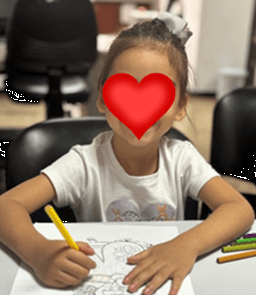
Dakota requires significant medical support and monitoring. Her primary diagnosis is Duchenne muscular dystrophy, and a genetic test confirmed she is a positive carrier for the condition (chromosomal region xp21.1, DMD gene), similar to her older brothers. This is a progressive muscle-wasting disorder that will require lifelong specialized care; language development disorder. Diana currently receives therapeutic support from a speech therapist.
Despite her medical diagnosis, Dakota has met several key developmental milestones. She is 3 years and 10 months old and has the motor skills to move independently. She can grab objects, dress herself, and use pencils or crayons without difficulty. She experiences some difficulties with language, particularly in completing simple sentences and expressing complex words. She is actively working on this in speech therapy. She is largely independent in her self-care routines. She can dress, undress, and use the bathroom correctly on her own but may need occasional help. Dakota attends a Child Development Center five days a week. She enjoys school and participates in all activities without difficulty, maintaining good relationships with her peers and teachers.
Dakota is an expressive and engaging little girl with a sweet personality. She is described as a tender, affectionate, and expressive child who enjoys both giving and receiving affection. She is generally happy and cries only when situations are genuinely uncomfortable or sad. She can experience jealousy with authority figures when their attention is shared with other children, which is typical for her age. Diana is sensitive, attentive, and empathetic toward other people. She shows age-appropriate autonomy and independence but still benefits from guidance in certain areas.
Dakota has a vibrant personality and a variety of interests that bring her joy. She enjoys group activities and is known for being collaborative. She has a great imagination and loves role-playing games, particularly pretending to be a doctor, mother, or teacher. She also enjoys playing with dolls, cooking sets, and building blocks. Dakota loves to draw, color, and work with play-doh. She has an established routine that includes school, playtime, and rest, which helps her thrive.
Dario #

Beyond his physical achievements, Dario is a bright and engaging little boy. He’s communicative, actively seeking attention and focusing intently on things that pique his interest. His memory is impressive, especially for the location of objects, and he readily connects people and items with his past experiences. Dario loves to play and interact, showing his joy with smiles and laughter, and he uses sounds and gestures to connect with those around him.
Suvi


Suvi is a calm child who lives with a foster mother that has fostered children with disabilities for many years. She attends a special school and has made progress since starting there. While she does do her school work, it is not with much academic skill and her teacher believes she will not make cognitive progress in learning and memory. Suvi’s foster mother reports she is obedient, affectionate, more autonomous, knows where her belongings are and is concerned about her self-care. While she is autonomous in some ways, she is dependent in others. For example, she wears diapers as it is not expected she will ever be able to use the restroom on her own, and while her motor skills have improved to the point she can walk (with difficulty) and crawl, she uses a wheelchair for long trips. She can take off and put on her shoes and clothes with assistance, washing herself in the bath, as well as some other tasks. Suvi does not have verbal language, though her foster mother reports she says things such as “I love you” and “thank you” though she would not speak for an assessment. However, she is able to express her emotions and needs to those who care for her. She is said to have many friends at her school and interacts favorably with others.
Suvi is a girly girl who loves having flowers and other accessories in her hair. When her hair is combed, she smiles. She loves pink and purple clothing, and enjoys playing with her baby doll she has named Baby. She enjoys playing with Barbie dolls, paint, dance and sing, watch Bluey, eat ice cream, and listen to music. Suvi needs a two-parent family who can commit the time and attention she needs to help her develop to her optimal abilities and who can ensure she receives the ongoing medical care she requires.
Raya #

Fletcher

Fletcher’s speech was undeveloped but since last report it has been tremendously improved. He is able to establish and maintain a conversation and ask questions. His caregivers described him as a curios child who is interested exploring his surrounding and seeking contact with kids and adults. He is calm, cheerful and polite boy with pleasant manners. He loves to cuddle and demonstrates the ability to bond.
Margo and Gabi #


Polymalformative syndrome: Congenital internal hydrocephalus and brain malformation with atrophy of the cerebral lobes and cerebellum; Implantation of the VPS. Hydronephrosis IIIst. on the right with renal calculus; pyeloplasty. Persistent foramen ovale and arterial duct. Symptomatic epilepsy Grand mal seizures. Spastic quadriparesis. Microcephaly. Severe neuropsychiatric development delay
Gabi
Short bowel syndrome. Abnormalities of absorption after surgery. Small bowel insufficiency. Condition after necrotizing enterocolitis. Condition after surgical intervention – termino-lateral ileo-colic anastomosis. Allergy to cow’s milk protein. Cavernous hemangioma on the right side of the face. Condition after: Prematurity IV degree. Neonatal respiratory distress syndrome. Retinopathy of prematurity. Bronchopulmonary dysplasia. Retention in the neuropsychological development. Hypotrophy II degree
Silas #

He walks independently, runs, climbs and descends stairs with support. He is interested in toys and will reach for them and play with them. His attention span with completing tasks continues to increase. He imitates syllables and words. He follows verbal directions and participates in games with peers. He is familiar with his environment and daily routine and interested in everything happening around him.
Scotland


He is 1.5 years old with a neurodegenerative disease called Huntington’s. We hope to find a qualified adoptive family to be Scotland parents.
Scotland has a gentle temperment. He lives with a foster family and each morning begins the day by giving a hug and kiss to his foster parents. From there, the day unfolds typically – with all kinds of playing!
Prior to submitting an inquiry to review Scotlands file, we ask you to learn about his genetic disease. The Huntington’s Disease Society of America website can be found here.
Katy

Elijah


Elijah was born to a teenaged mother who tried her very best to take care of him and his medical needs. She moved to a city where he could have daily dialysis and even continued studying in school. However, it became clear to her that she could not provide him with everything he needed, especially given his medical needs. It seems both Eli and his mother went into protective care together and she would take care of him and accompany him to dialysis, with the foster mother caring for him while she continued her schooling. When she graduated, she knew she could not provide for him the way he needed, and she made the hard and selfless decision to allow Eli to be declared adoptable. Eli has no relationship with his biological father and has no siblings in care.
Elijah thrived in the specialized institutional setting where he received round-the-clock medical care and developmental support during the time his kidney was failing. There he blossomed into a happy, social, and resilient little boy who formed strong, loving bonds with his caregivers. During the time he was receiving dialysis at the institutional setting, he received peritoneal dialysis during the night so that he could be a normal of a child as possible during the day. Even during his illness, Elijah was meeting most of his age-appropriate milestones at the time of this report when he had just turned 3: He walked independently, was learning to run, and had a blossoming vocabulary; he formed simple sentences, communicated his needs, and loved to learn new words. He was receiving ongoing support from a team of therapists (occupational, physical, speech) who helped him make incredible progress.
Elijah is a social butterfly! He is described as loving, expressive, intelligent, and active. He easily forms strong bonds and shows his affection through hugs and kisses. He has a great sense of humor and loves to make people smile. While generally happy, he can become frustrated or sad when his favorite people aren’t near, but he is easily comforted and redirected. He is sensitive to loud noises and chaotic environments but feels secure in a calm, structured setting.
Elijah is all about fun and play! He adores playing with cars, balls, and building blocks. He has a passion for music, and his favorite characters include Mickey Mouse and Gallo Bartolito. He enjoys being active, whether it’s going for walks or playing “chase”. He also loves coloring and watching children’s videos. He shows a budding sense of style and has a particular fondness for his shark-themed sandals! Eli loves being around other people, both children and adults. He interacts easily, shares his toys, and has a generous spirit. He is learning to navigate social rules and follow instructions, showing a strong desire to please the adults he trusts. He forms deep attachments and thrives on positive attention and praise.
Elijah is an extraordinary little boy whose medical needs are/were just one part of his story. Could being your son be in the next part of his story?
Lennon

Lennon is a cheerful, active, and loving child. He always responds with a smile to those who take care of him. He sleeps well at night and takes a nap after lunch. He is a good eater. Some of his favorites are watermelon and beans. He likes to listen, sing, and dance. It is evident that Lennon relates to music. He follows the rhythm with his hands by clapping. dancing, jumping, and singing. He likes to feel the volume of the songs in a regulated way, paying careful attention to the beat. He loves to play with balls, specifically throwing them. He also likes to role play. He likes to feel well-dressed and receive compliments on his fashion.
So many pictures and videos are available for this darling boy, with the agency! The agency also offers families a reduced fee / grant for families.
Matt

$25.00 has been donated towards the cost of my adoption!
We hope his forever family sees him while he is still so young! Contact the agency to learn more about Matt and his special needs!
VIDEO:
https://vimeo.com/maaspecialkids/maa-matt
Password: Adoptmaa
Ruby

Bringing Ruby into your home means opening your hearts to a child who will thrive on love, encouragement, and the opportunity to reach her full potential. She’ll need a family committed to providing her with the specialized care and resources that will allow her to navigate the world with confidence and independence. If you are ready to embark on an extraordinary adventure of parenthood and provide Ruby with the secure and loving home she deserves, we encourage you to learn more about adopting this incredible little girl. Ruby is ready to share her bright spirit and boundless curiosity with a family who will cherish her, just as she is.
Kitt

Kitt is a 14-month-old baby boy in Asia who needs a family! Despite being born drug addicted with various medical diagnoses, all of his birth conditions resolved with good prognosis. His foster mother has raised concerns of possible seizures previously, but nothing showed on the tests. However, he was hospitalized last month for possible seizures for which he is being monitored. He does have a small Atrial Septal Defect/Patent Foramen Ovale which will require monitoring. In November, it was observed that his developmental condition was catching up and the occupational therapist assigned some exercises to further assist. Kitt is starting to walk unassisted.
Kitt is a cheerful and responsive baby that loves interacting with people when his foster parents are present. He is attached to his foster parents and shows signs of separation anxiety when they are away. His foster parents and their adult daughter dote on Kitt and are very attentive to his needs.
Due to his country’s unique matching process, families with a current home study for any country are able to submit for consideration of Kitt.
Pip

Pip has overcome more in her 9 years than many do in a lifetime. Due to circumstances in her family of origin, Pip came into care permanently in 2019 after being reunited with her birth family for almost a year after being in care from the time she was a baby until then. However, it was determined that Pip was again being abused by her family and she was removed from their care.
Despite being born testing positive for methamphetamine and suffering physical abuse, Pip has overcome many of the effects of her life circumstances. For some time, she struggled not only with a diagnosis of global developmental delay (19 months), but also behavioral difficulties that resulted from the emotional turmoil she was experiencing. CHI has two reports on Pip, the first of which gives a lot of detail regarding the behavioral responses to her inner emotional turmoil Pip experienced and the process by which she has worked through them over time. With regard to her developmental delays, by the age of 4, she was on target with regard to fine and motor skills, but behind on language comprehension and expression. However, with continued therapy and starting nursery school, by the time she was six she had achieved normal speech development. Once she was in second grade, it was determined she had learning difficulties in reading and writing with difficulty with attention an behavior control. In light of these difficulties, Pip was assessed and diagnosed with ADHD.
Once the correct medication for her ADHD was determined in September 2024, the difference in Pip’s motivation to learn and ability to stay on task has improved dramatically. She can now read textbooks and full passages independently when she previously relied on adults for assistance to get through academic tasks. She receives tutoring and with encouragement from the important adults in her life, she is able to complete her homework with confidence. While she used to have trouble sitting still and even remaining in the classroom, this is not longer the case which her school staff members attribute to not only the medication but also a stronger relationship with the new teachers. Additionally, while Pip used to have temper tantrums and even had physical conflict with her classmates, since starting medication, there have been no similar instances. When she has become upset at school, she is better able to cope and calm herself down. It is believed that many of her previous behaviors were related to a lack of confidence in school and her academic abilities, and now that she is gaining confidence in these areas, her behaviors have become positive in nature. In addition, her current caretakers and teachers are careful to explain rules and establish boundaries, while also taking time to explain why these rules exist, and also have established a reward system.
It has been observed that Pip is caring toward other children, often sharing snacks or encouraging them when they are upset. She has also taken the initiative in the group home to care for the younger children and even took it upon herself to walk another child to the bathroom during the night who was afraid of the dark. Her psychosocial team has discussed adoption with Pip. At first she was hesitant due to fears of language barriers and also missing her houseparent and friends, but she has gradually embraced the idea of overseas adoption and has a positive attitude toward it. She welcomes the idea of having caring parents and even siblings to play with. She has expressed how she would imagine it would be with a new mother and father.
Stanley #

Theo #

Monica, Ross and Joey


Monica
She feels safe at the orphanage now and she is open and happy girl. She was shy and withdrawal at first dealing with her childhood trauma and depression. She is a cheerful girl who is loved by her caregivers and peers. Her hobby is horse-riding, and she is passionate about it.
Ross
The boy is calm, polite, and friendly child. His intellectual level is above average according to the testing. He does well in school and only needs help with math occasionally. Soccer is his favorite sport, and he is a part of the local soccer club.
Joey
He is cheerful and obedient child who is very curious about his surroundings. His development is delayed but he is progressing well and becomes independent in everyday situations.
——-
They are healthy and intelligent children. The orphanage director and caregivers couldn’t praise them enough and hope the family will be found for all three of them by the end of this year (2024) and if not, the youngest will be separated from them so he will have a chance of finding family. According to the records, they went to the care in September 2023. Their biological parents’ home wasn’t a safe place, more likely they witnessed their parents’ bad behavior, unhealthy environment and bad choices. There is a strong bond between these siblings, and they want to be together and have a forever family who will love and support them.
Perry May

Mary Anne

The agency has photos and a video of her.
Jocelyn


While her country does not allow photos to be shared publicly, the agency does have photos and videos of Jocelyn to share with qualified families.
Grana

The agency has photos and a video of Grana. In the video, she is talking and singing.
Robert


Grant funds depend on available funding; the link above, shows the current available amount!
To inquire about this child, email childinquiry@reecesrainbow.org ***
Robert is much more easy going and independent now. He’s made a lot of progress in the last couple of years! He’s honestly such a happy boy who loves people, hugs, and music. He’s quite good at taking selfies on cell phones too.
He loves to play on his own, not in a way that he doesn’t play with others but meaning he doesn’t need someone to entertain him. He builds with magnetic tiles and enjoys creative play with his dolls/stuffed animals. Sometimes he sets up his stuffed animals and babies to pretend to feed them or do school. Other nights he’s hanging his sheet across the room to make a hammock swing. He makes his foster family laugh a lot!
He’s independent with getting dressed, showering, changing his sheets and etc. Occasionally, accidents at night but they are few and far between. He eats and drinks on his own but he doesn’t chew well. He could use OT for this.
He is such a kind helper and aware of routines or tasks needing to be done. For example, if his foster mom is getting another child ready, without prompting, he will go get clothes and socks/shoes for them too.
He LOVES his big bike! 3 years ago he was scared of a bike but now he rides around on his 24inch bike, no problem! He enjoys jumping on the trampoline and going on walks. He is still drawn to trees and shadows for sensory input.
He may cross his arms and refuse to cooperate. Sometimes shakes his head or cries. This used to happen frequently but it is not frequent anymore. We can work through it much easier now though. He mostly does it when he is trying to express something he needs/wants or doesn’t want. So he is using it to try to communicate where his speech is limited. He makes noises or talks with the handful of phrases he can say. He is learning to expand his vocabulary.
His natural response used to be to run when he was scared but very rarely does he do that now too. For example, medical appointments were always difficult for him, needing days to prepare ahead. Now he is fine to go and doesn’t need much prepping.
He’s such a joy to live with and he would flourish even more in a family!
School update: Robert loves school! He is such a fun student to have because he is excited about everything he does, and other kids too. He is constantly cheering for himself or for his friends and wanting to help them out in any way! He has transitioned to a full day of school easily.
He is very good at sorting. He can match or sort any colors, letters, and numbers. He has delays but we are continuing to work with him. He likes sensory play like kinetic sand, shaving cream, and water beads.
He has so much potential to learn so many things if he were to have access to more services!
Lollie


Grant funds depend on available funding; the link above, shows the current available amount!
To inquire about this child, email childinquiry@reecesrainbow.org ***
Update October 2022: Lollie is a sweet, easy going 11 year old that has been waiting for a family since she was a baby. She has CP, CVI, and epilepsy well controlled with medication. She doesn’t have purposeful movement in her body and it is very difficult to know exactly how much she can see so it is very difficult to tell exactly how much she understands. She has preferences of what she likes to do, but doesn’t really ever get upset or cry unless she is in pain. Her favorite things to do are sensory input activities like going for walks and in a bike trailer on bumpy roads, and using the sensory materials at school. In therapy she is working on range of motion and other stretches to help her muscles be less tight. Recently her contractures have gotten a lot worse and she has had some other skeletal issues like a dislocated hip, and getting pressure sores a lot easier. She is a joy to be around and is loved by all her caregivers! She would thrive in a family! Lollie has videos on request.
Updated August 2019: Lollie is a sweet girl who is almost always happy. She is adored by everyone she meets, and has been the favorite in our house since she arrived! Her favorite thing to do is go for walks and car rides on bumpy roads. When she is happy her laugh can be heard from quite a long way off! The only thing that makes her mad is standing in her stander at therapy. Her nannies love to dress her up and fix her hair. She has a vision impairment, and does not have a lot of purposeful movement.
In school she is working on responding to different stimulation and focusing her eyes on one object at a time, and at therapy she is doing range of motion stretches, standing, and several other things.
Jesper

Jesper’s favorite activities include kicking around a Jianzi shuttlecock, spinning a Diabolo, and watching his favorite cartoons, Pokemon and Mysterious Joker! Jesper is a bit shy around strangers and when in new environments. but once he warms up to a person he really enjoys interacting with that individual! Those who know him share that he is a warm hearted child who likes to help others, both at school and at the children’s home.
Jesper lives in a children’s home with 12 boys of similar ages. Math and Mandarin are his favorite school subjects. Jesper’s teacher says he is bright and cheerful with a strong ability to learn. Jesper takes initiative and isn’t afraid to ask his teacher or caregiver questions when he doesn’t understand his schoolwork.
Cory


Cory was born premature. He has cerebral palsy, paresis of the limbs, with a predominance of the lower limbs. He moves in a wheelchair, has a vision defect, convergent strabismus, amblyopia, cryptorchidism. Cory moves on his fours or in a wheelchair. The boy tries to be independent – he feeds himself, uses the toilet, gets dressed. He has therapies every day and can walk with adult’s help.
Update 2024: Unfortunately, the siblings were separated; the sister was adopted domestically.
Update April 2024. His health condition is good. The child can be in a straight sitting position and can do a lot of things without help, independently moves around in a wheelchair and independently gets in and out of a wheelchair. He is developmentally delayed, and his motor skills are undeveloped in some areas. His speech is at a good level. He is willing participating in group activities, he interacts well with peers and adults.
Danny #


$2,885.58 has been donated towards the cost of my adoption!
UPDATE August 2022: He pulls to a stand in his crib. He crawls using his arms to drag his lower body (“army crawl”). He has a lot of upper body strength. He participates in group activities. He plays with toys. He pushes the buttons on toys, “dials” a toy phone, etc. He follows simple directions. He says a few simple words. He responds to his name. He enjoys listening to music. He eats from a spoon and drinks from an open cup. He tries very hard to be more mobile, despite his lower paralysis. As a result, he has broken a bone in one of his legs. The staff tries to keep him sitting in a chair where he can see everything going on in the room and participate in activities, without risking further injury to his leg. He interacts with other children sitting around him.
Nila and Nikki


Nila enjoys playing with toys and playing outdoors. Nila is known to be strong willed, not timid, and gets along well with her peers. Nila resides with a foster family and has a close bond with her 8 year old foster brother.
Nila has mild cognitive developmental delays. She is a second grader in elementary school and attends resource classes. Nila attends an afterschool program where she can receive extra assistance with her school work. When asked about her favorite subject in school, Nila stated music class because she loves to sing!
Nikki’s favorite activity is playing games like Red Light, Green Light and Hide-and-Seek! Nikki also enjoys playground slides, drawing, watching cartoons, and anything involving Princess Elsa. Nikki’s foster mother describes her as outgoing and passionate. She isn’t shy and will excitedly approach new people.
Nikki has global delays and suspected ADHD. She attends weekly physical, occupational, and speech therapies. Nikki made notable improvements since starting these therapies. She can identify colors, count to 20, draw pictures, and speak in full sentences. Nikki attends kindergarten and stated she likes school. Each day, Nikki eagerly shares about her day with her foster mother.
Nila and Nikki live in separate foster homes. They have had the opportunity to spend time with each other at events sponsored by their social welfare agency. In a recent outing, the girls spent time together enjoying the sights and activities at a dinosaur theme park! The sisters have a 9 year old brother who was adopted to a family residing in Denmark.
Madeline, Vaughn, and Hadley


Vaughn, boy, age 8
The boy is charming, smiley, and sensitive child. He is active and likes to play soccer and participate in other activities. He is learning without any problems in school, but his intellectual development is disharmonic according to the testing. He doesn’t have any behavioral problems but would forget about safety sometimes and needs a reminder. He is a popular child who equally enjoys the company of his sisters and other children.
Hadley, girl, age 5
The girl can be shy at first but adjusted really well. She is a happy child who eager to participate in the activities and play with her peers. She is potty trained. She enjoys art, music and cooking. The child is seeking contacts with adults.
Madeline, girl, age 9
This girl is open-minded, calm and cheerful child. She doesn’t create any conflicts and her behavior is normal. She can be sad sometimes. There is definitely grief and loss, and she seeks adults’ support and conversation. Her development is up to her age. She adapted well and willingly participated in the activities. She likes to cuddle.



