This grant is offered by Reece’s Rainbow, for children in this specific country. Grant funds are dependent on available funding. For more information, email childinquiry@reecesrainbow.org ***


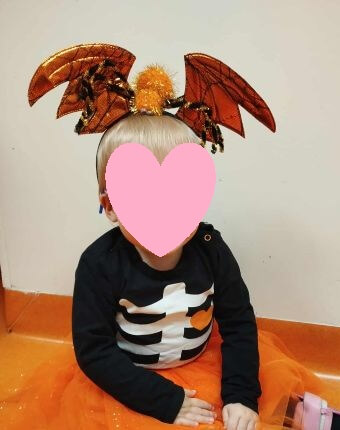
Sienna has a speech delay, although she has recently been eagerly repeating and saying words on her own. Some words are difficult to understand, but progress in speech development is evident. The girl also has difficulty understanding speech, but here too, progress is visible. She understands simple words, especially when they are supported by gestures. The girl can be engaged in a simple form of “dialogue” through play such as sharing toys. She is learning how to draw and eat independently using the spoon. She is able to pick up food cut into smaller pieces and put it in her mouth, although she does so slowly and uncertainly. She has difficulty biting off solid food and chewing it.
Sienna is a very cheerful and smiling child. She is speaking more and more – she can use many basic words, such as “give,” “more,” “come,” “yes,” “no,” “auntie,” and “hello.” She uses them in appropriate situations to express her needs and emotions. She recognizes various animals and can imitate most of their sounds.
Sienna to cuddle and read books. She participates enthusiastically in the group activities and enjoys walks. She responds to smiles, touch, and the voice of her caregivers. The girl has recently made significant progress in her emotional and social development. She is also able to initiate contact – she waves her hands in greeting, says “hello” in her own way, or responds with simple vocalizations. She is able to express her dissatisfaction, joy, or excitement and her progress is getting better and better in many areas.

Congenital anomaly of the nervous system (CANS): Spina bifida aperta, condition after surgical treatment; Hydrocephalus, condition after implantation of a ventriculoperitoneal shunt (VPS). Cerebral palsy. Symptomatic epilepsy. Pseudobulbar paresis. Pelvic-reservoir deficiency. Bilateral inguinal hernias. GER. Protein-energy deficiency. Cortical blindness. Profound delay in neuropsychiatric development

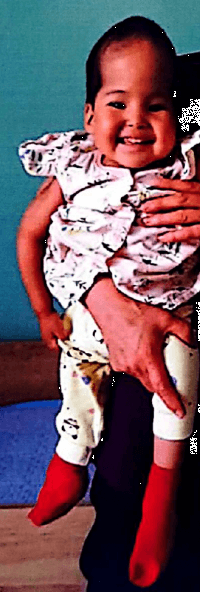
Meet smiling Melly. She had surgical treatment for correction of a meningocele. A ventriculoperitoneal shunt was also implanted to treat hydrocephalus. Unfortunately after surgery Melly’s lower limbs are paralyzed.
Melly moves independently in a wheelchair. She can pull herself up with her hands She enjoys contact with children and adults. She plays with toys, handles them, and can throw them. Melly pronounces various sounds and syllables although she points to make her needs known. She can maintain interest in an activity for 15-20 minutes.

Eloise’s ability to communicate her needs and emotions through gestures and sounds demonstrates her keen self-awareness, and her empathetic nature is evident when she comforts her loved ones. Though faced with medical challenges, Eloise has proven to be remarkably resilient.
VIDEOS:
https://vimeo.com/
https://vimeo.com/
https://vimeo.com/
https://vimeo.com/
https://vimeo.com/
https://vimeo.com/
Password: Adoptmaa
Agency fee reductions may be available based on the adoptive family’s circumstances.

When Mell was born, his biological parents tried to take care of him even with his special needs, but they lived in a small town far away from cities and hospitals. At his one month check-up, he was diagnosed with congenital malformation of the spinal cord, hydrocephalus, low weight, fetal growth delay, and respiratory syndrome. At one of his following check-ups, the doctor sent Mell to the hospital due to a high fever and inflammation of the brain. Sadly, though they had tried, his parents recognized that they did not have the means of caring for him in the ways he needed, both due to finances and distance from necessary medical care, and they asked Protective Services to care for him. No other family members were able to provide the care he needed as well. Mell was placed in a foster home and is doing well.
Mell has been receiving various types of therapies which have been valuable in his development. When meeting adults for the first time, he becomes shy, but he recognizes familiar people and loves to interact with them. Mell identifies the emotions on people´s faces and interacts accordingly. He is a very expressive child who shows affection in various ways, and sometimes gets jealous when his foster mother gives affection to the other children. According to the professionals who care for him, Mell has the language development of a 12-month toddler. He communicates through crying and screaming and can say some short words such as “mama” and “papa.” He also imitates animal sounds, such as those of a dog or cat. He responds to simple instructions such “Take this” and “Give me that.” Mell identifies different body parts, plays with Play-Dough, and performs other activities that strengthen his fine motor skills. His movements are spontaneous despite the limitations he has in his lower limbs. Due to his chronological age, Mell requires support, supervision, and guidance to fulfill his daily routines. Mell takes two naps during the day and sleeps throughout the night. He wears diapers all day.
Mell likes to interact with peers or adults and loves to spend time outside. He gets excited when he hears a motorcycle engine as he immediately thinks he is going to go out and gets anxious. He gets upset when his diaper is dirty and when he is not allowed to go out. Mell gets happy with simple things, and he likes to laugh a lot. Mell loves to drink sweet juices. Due to his medical condition, he does not wear shoes but wears very soft socks. He enjoys it when adults help him to kick the ball to play soccer. Mell also likes to play with cars and airplanes.


Update Nov 2024: Samson was recently moved from a large orphanage to a small group home for children with disabilities. He loves attention and responds with joy with staff interacts with him. He is described as a calm and radiant child.


Update 10/24
He has several special needs including congenital internal hydrocephalus and spina bifida aperta (thoraco-lumbar). Vernon is undergoing daily rehabilitation. His condition is monitored by a pediatric neurologist, a neurosurgeon and a pediatrician.
Vernon can turn independently from his back to his stomach and vice versa. He has good head control. He can purposefully grab a toy and hold it. He enjoys personal attention from an adult, laughs loudly at teasing and reacts with displeasure when left unattended. He is mostly calm. No aggressive behavior was recorded. When he is called by name, he turns toward the direction of the sound. He reacts to a noise stimulus. He speaks syllables and long sound combinations.


Despite her disabilities, the girl is very active. She is very happy to work during rehabilitation, thanks to which she is willing to participate in social life and has accepted her disabilities. She is attending wheelchair dance classes. The girl functions very well on a daily basis and is independent. She likes to play with younger children and often organizes games for them.


Update Jan 2020:
Julian sits on his own while supporting his weight on his hands. He uses his hands to change his posture and move his body. He stands in the walker. He actively grabs and manipulates toys and objects, tries to use them as intended – shakes to produce sound, pulls the string of a musical toy. Visual-motor coordination is slightly impaired.

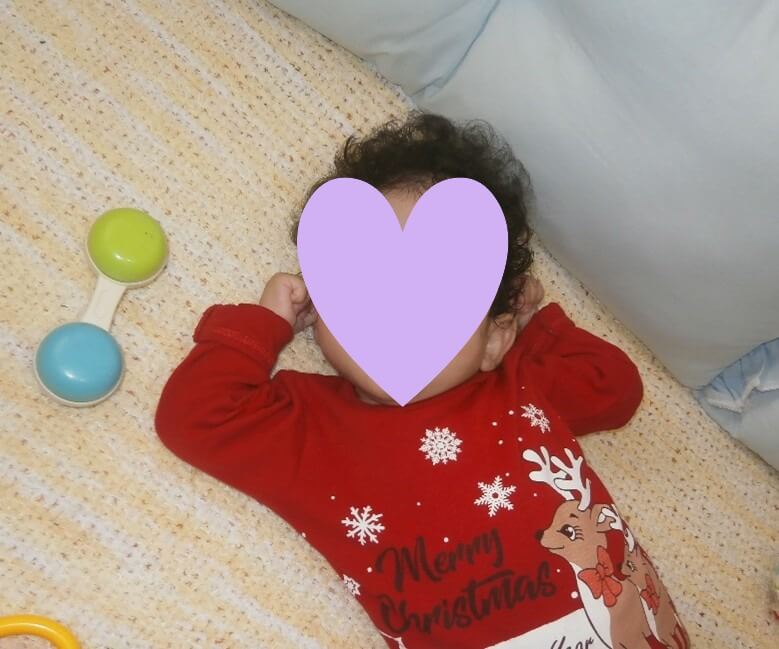
Delaney expresses her preferences to people and objects to which she is more attached. She has three favorite toys that are colorful and soft. She also enjoys listening to music especially children’s songs. She doesn’t like lying on her back and sudden and quick movements. She is able to sit independently and grab and hold objects she has very strong hands she uses well. She feels comfortable when around her there are people with who she is familiar with.
Delaney is able to express her opinion and preference with gestures. Delaney is very calm child with big potential for improvement with the needed care, attention and the feeling of the real family environment.