Myles #


Special needs: pulmonary artery stenosis, tetralogy of fallot, developmental disorder, speech delay, acute malnutrition.
Zariah is 11 years old. She is a quiet and kind-hearted girl. She plays well with other children. She is developmentally delayed and will need help to reach her potential. She wants to be adopted.
Special needs: developmental disorder, speech delay.


Yoshi was removed from his family at a young age, due to their lack of ability to provide adequate care. Yoshi presents with a complex medical profile requiring ongoing attention and care. His primary diagnoses include: Neurodevelopmental delay: affecting various areas of growth; Macrocephaly: disproportion of the skull/face and minor facial dysmorphisms; Muscular Hypotrophy: specifically noted in the lower extremities, though they are symmetrical; Growth Concerns: short stature and low weight, previously hospitalized for protein-calorie malnutrition; Expressive Language Disorder: significant difficulties in verbal communication; Cardiac Concerns: possible pulmonary valve insufficiency and mild tricuspid insufficiency (syndrome under study). He has a history of hospitalization for respiratory infections (pneumonia) and malnutrition but has stabilized under current care. He has no known allergies. His current medical regimen includes nutritional support. His vaccination schedule is up to date for his age.
Yoshi faces several developmental challenges. He exhibits a significant delay in verbal expression. His vocabulary is limited, and he struggles with pronunciation, articulation, and structuring sentences. He primarily uses gestures and short words to communicate. While he has shown improved mobility, he experiences difficulties with gross motor skills such as running, jumping, and climbing stairs. He exhibits generalized hypotonia and issues with balance and coordination. He has cognitive difficulties understanding complex instructions. He is currently working on sphincter control and still requires diapers. However, he is showing progress in independence, such as using a spoon during meals.
Despite his challenges, Yoshi possesses a warm and engaging personality. He is described as an active, affectionate, and receptive child. He shows a genuine interest in social interaction and engaging with the world around him. Yoshi has an adequate capacity to form bonds with significant adults and is progressively learning to interact with peers. He enjoys group play and is capable of sharing toys. He tends to express his emotions clearly through facial expressions and gestures. He thrives in environments where he feels emotionally secure.
Yoshi is a child with distinct likes and dislikes that help define his daily life: He has a strong preference for symbolic and construction games. He enjoys recreational activities, particularly playing ball, searching for elements, and visiting parks or rivers. He enjoys fruits such as bananas, watermelon, tangerines, and oranges. He dislikes pineapple and chopped papaya (though he accepts papaya in juice form). He benefits from a structured sleep routine, sleeping easily and restfully, which contributes positively to his mood and willingness to participate in daily activities.
Yoshi requires a parenting style that combines deep affection with structure. His ideal home will prioritize his medical and therapeutic needs—including ongoing nutritional support and developmental therapies—while providing an emotionally safe and orderly environment.

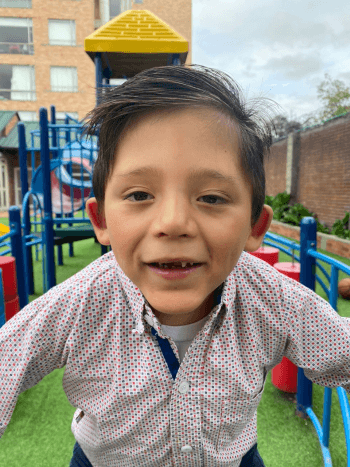
Her caregiver described her as cheerful and happy girl. She has no issues with trust, open to new people and likes to cuddle. She is curious about her surrounding and asks a lot of questions.
She doesn’t always listen what is said to her and has some difficulties with rules and directions. She can be stubborn and needs help with her emotion’s regulation. She started pre-school in September 2024. She loses an interest quickly and has problems to finish her tasks. She enjoys looking at the books, stalking blocks, working with small objects and clay. She likes music and willingly participates in singing activities. Her vocabulary increased and she learns how to ride a scooter. She likes walking and playing outside. She still needs help with her physiological needs. She can dress without help and eats independently.

He was born with low weight and with pathological neonatal period. The child has a
physical development within the lower limit of the norm and mental delay in mild to moderate degree (IQ-41). Phrase speech is not developed, he utters single words; lags behind in the development of habits, skills, emotional and social development.
Uses optical correction due to intermittent heterotropy and astigmatism of the eyes.
The child walks stably and independently. There is delay in the development of the fine motor skills. The emotional status of the child is mostly positive – he is calm and curious. He does not show aggression, he is adaptive. He understands phrasal speech, utters single words, but does not speak. The child is able to play by himself, but he also is looking for the company of other children. Participates in the game process. He feeds himself, his personal hygiene is well-maintained. He controls physiological needs.

Anna is known for being a happy girl. Anna is not enrolled in school as it has been difficult to find an Institution that can work with her diagnosis and special needs. However, when she was enrolled in school, it was noted that she behaved positively and recognized authority figures. Anna loves to give and receive affection, and she does not get jealous when her foster mother pays attention to other children. Her closest bond is with the 12-year-old daughter of her foster mother. She needs support and supervision to fulfill her daily routines. Anna has a good sleep and eating patterns; however, she very occasionally wets the bed. Anna sometimes throws objects to the floor when she feels frustrated. She can follow simple instructions. Due to her diagnosis, it is hard for her to stay focused on one specific task.
Anna can keep her balance and walk, and she tries to jump but is not fully able to do it. She can run slowly and up the stairs if an adult holds her hand. Her fine motor skills are still developing. Anna is not able to hold scissors, but she can grab pencils and color. She needs help with dressing and hygiene. For the most part, Anna communicates through signs and very short words; it is not hard to understand what she wants. She goes to speech therapy. Anna recognizes familiar faces, and she does not get shy when meeting new people. She can play with younger children or with peers, but she gets upset when other children take her belongings. She recognizes her foster mother as an authority figure. She likes dogs as long as they are away from her, and she gets nervous when pets are near her.
Being told she looks pretty or that she is beautiful makes Anna happy. She loves to have her hair done in pretty styles and enjoys wearing new clothes. She likes to watch children’s movies and videos of people doing exercises. She is very good at swimming. Anna´s favorite foods are spaghetti and chicken with rice. She loves to listen to music and do puzzles.

Gene’s information is from a report in June 2024 — the agency does have older reports as well. Gene was 7 years old when he entered care due to neglect. He spent most of his days on the streets and there were behavioral issues within his family of origin. His father was in jail and his mother was involved in criminal activities as well as drug usage. While she said she was going to make changes in her life to regain her son’s custody, she did not follow through. Gene is now 12 years old.
Gene is in the 4th grade. He struggles academically. It is difficult for him to understand new concepts and therefore is unmotivated to do his best. He still has trouble pronouncing properly many words. In 2020 he was diagnosed with mild cognitive developmental delay, but this diagnosis was overruled though an IQ test is pending. He can get easily distracted if he does not like a specific activity. There are no concerns regarding his motor development. His language development is behind, it is difficult for him to comprehend a reading assignment; and he mispronounces some words. In the middle of the night, it is necessary to wake him up to go to the bathroom so that he will not have any accidents. Gene has been learning to manage his frustrations and impulses in a better way. Gene interacts in a positive way with his peers. Gene recognizes authority figures; he is respectful and obedient towards them. It has been observed that Gene interacts positively with adults, kids his age, younger children, and animals.
Currently, Gene goes to therapy, and he has been diagnosed with unspecified mixed behavioral issues for which he takes daily medication. He gets anxious whenever he is not permitted to do something he wants or whenever he does not fully understand a task. He gets upset when he feels he is being attacked, but he has not become aggressive. Gene is afraid of being alone, getting lost and being in the dark. Whenever he feels sad it is because he longs to have a family.
Gene loves to participate in any recreational activity, including sports. Some of Gene’s favorite activities are playing soccer, going to the park, playing cops and robbers, making bracelets and painting. When he grows up, he would like to be a professional soccer player or a chef.

Christopher now has a $500 agency fee reduction for his adoption; Additional agency fee reductions may be available based on the adoptive family’ circumstances!

Nathan is a second grader in elementary school. His teacher stated he is considerate and gets along well with his peers. Nathan receives one-on-one tutoring to help him with his homework, and he is taking additional one-on-one language lessons with his teacher at school.
Naomi’s favorite activities include listening to stories, playing games, playing with toy cars, running and jumping rope. Those who know Naomi describe her as shy at first and takes time when she is getting to know someone new. Once she has built a relationship with someone, she is friendly and enjoys interacting with them.
Naomi is receiving occupational therapy for fine motor delays and speech therapy for her language delays. Her speech therapist mentioned she has made vast improvements on pronunciation since starting therapy. At school her teacher has Naomi read passages aloud from her textbook to help strengthen her pronunciation of words.
Naomi is a first grader in elementary school. Her teacher stated she has good learning skills, and she gets along well with her peers.
Nathan and Naomi live at the same children’s home, where they are able to continue to have a close relationship. Nathan shares a room with 3 other boys between the ages of 6-12 years old, and Naomi shares a room with 3 other girls between the ages of 6-11 years old.
Are you a family that can give the necessary time to build a trusting bond with Naomi? Give Nathan one-on-one time to help him focus on tasks at hand?

Jianna’s favorite activity is singing and preforming on stage at church. She has a good sense of rhythm, and she can hum the melody of songs she’s only listened to once or twice! When Jianna isn’t performing, she enjoys riding her bicycle and watching Sailor Moon. Those who know Jianna describe her as friendly and say she LOVES to laugh!
Jianna has moderate cognitive, speech, and motor delays. She currently attends occupational, speech and physical therapy weekly. Jianna is enrolled in elementary school and attends special education classes. Her teacher noted she is able to identify colors, identify objects and their names, and speak in short sentences.
Could you imagine yourself dancing and singing karaoke with Jianna? If you think you could be the right family for her, don’t hesitate to reach out!

She completed 3rd grade and needs help with her classes. Her caregivers describe her as kind and nice girl who smiles a lot. She has a positive attitude with her peers and adults. She is very close with her brother.
Paul graduated from kindergarten this year. His health is good, but he has a speech impairment and minor developmental delay. He likes to play outside and enjoys soccer and biking. He loves art and is making progress with learning.
They are nice children who are dreaming of having parents and will do well in a family.

Update 2022:
Natala participated in our February 2022 Virtual Superkids trip. She was 2 1/2 years old during the visit. Natala is a special girl who will require lifelong care by her adoptive parents.
Natala expresses her joy through smiling and laughing. She enjoys toys that make sounds and lights up when playing with dolls. She expresses sadness through crying. Natala has global delays in development and non-verbal. She is most comforted and connected to her foster mother.