Teressa #


Kali is active and enjoys physical activities, music, outdoor play, and creative activities. She has a wonderful imagination and especially enjoys play-based and hands-on activities.
She is doing well with her daily routines and continues to develop her independence. At school, Kali benefits from additional support, clear instructions, and encouragement. She responds especially well to individual attention and positive reinforcement.
Kali enjoys building relationships with others and is described as caring and empathetic. She may need patience, reassurance, and emotional support as she adjusts to the idea of adoption.
Kali would benefit from a loving, patient family who can provide consistency, encouragement, and a supportive environment where she can continue to grow in confidence and independence.

Dolly can be a little shy and sometimes prefers to spend time on her own, but she enjoys connecting with others and has a positive attitude toward adoption. She enjoys learning and is able to write from dictation, although she works at a slower pace.
Dolly would benefit from a patient, loving family who can provide reassurance, encouragement, and a safe, supportive environment where she can continue to build confidence and thrive.


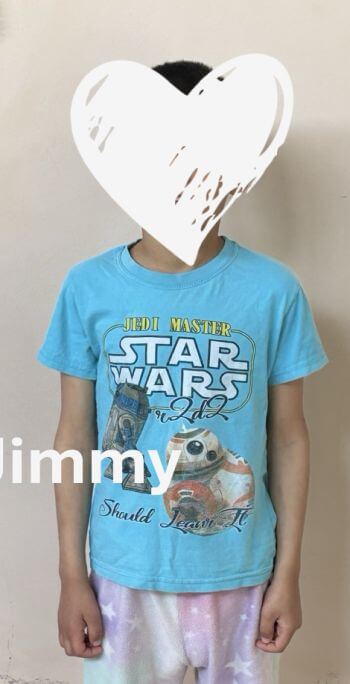
Jimmy has significant developmental and intellectual delays and requires assistance with most daily activities, including communication, self-care, and personal hygiene. He is nonverbal and communicates primarily through vocalizations, gestures, and his responses to familiar people and routines. While he does not actively seek out interaction with peers, he responds positively to consistent care, attention, and nurturing relationships.
Physically, Jimmy is healthy and has no motor impairments. He enjoys sensory experiences, including time in a dry pool, tactile activities, ball play, and jumping on a trampoline. He is curious about his surroundings and benefits from hands-on exploration and sensory-based activities.


Kody: prematurity; attachment disorder – disinhibited type, in a child with low stimulation

Information is from September 2024
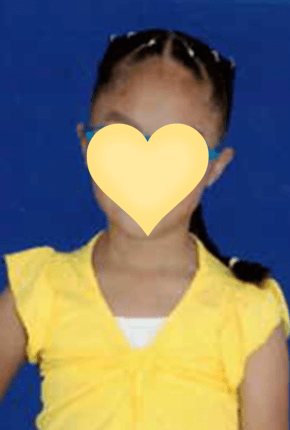
Summary: Yessica is a 7-year-old girl who has faced significant instability in her early life. She was abandoned by her biological parents, and then she lived with her grandfather until 2023, when he could not longer care for her needs.
Yessica has specific medical needs, particularly concerning her vision and behavioral health, both of which require consistent management. Yenci has complex visual diagnoses including low vision, bilateral amblyopia, astigmatism, hypermetropia, secondary exotropia, and nystagmus (irregular eye movements) with a rotational component. She underwent surgery for strabismus around April 2024 and currently wears corrective lenses. She has been diagnosed with behavioral disorder. She takes daily medication for her latter diagnosis. Her weight and height are appropriate for her age. She has received dental treatment for cavities and is in good oral health.
Yessica is currently enrolled in the second grade. She has experienced difficulties with academic performance, including low grades and failing subjects, largely due to challenges with concentration and understanding tasks. She struggles particularly with Language but shows aptitude in math, art, and religion. With increased support at home, her interest in studying is improving. Yessica demonstrates clear language use with coherent content and age-appropriate vocabulary. Her thinking is flexible, allowing her to identify risks and consequences. She is also advancing in reading comprehension. She has adequate fine and gross motor function, showing good coordination and manipulation skills.
Yessica is an affectionate child who is learning to navigate her emotions with professional support. She is currently going to psychiatry and psychology therapy to address behavioral difficulties. She needs support managing frustration and developing assertive responses. She can be impulsive (accelerated behavior), has difficulty staying still, and may struggle with following institutional rules, occasionally displaying rebellious or defiant behavior. Yessica is capable of giving and receiving affection. While she can be jealous with significant figures, she is responsive to dialogue and understands situations after discussion. She has developed skills to express her emotions, needs, and desires more clearly. She can lose motivation easily but is capable of regaining it through encouragement and dialogue.
Yessica has distinct preferences that give insight into her personality and what she hopes for in a family. She enjoys playing with dolls and has a fondness for dresses and shoes. Yessica has expressed a preference for adoption by a nuclear family (mom and dad) or a single-parent maternal family. She is indifferent as to whether the family already has other children. Despite her challenges, she shows a willingness to connect and has a preference for feminine figures, though she is open to a nuclear family structure. A balance of clear, consistent rules with warm affection is crucial to help her feel secure and manage her conduct disorder.

Sibling group of 3 in Eastern Europe- Girl born March 2011, Boy born March 2013, and Girl born March 2015
The children live together and have a close relationship. They all want to be adopted together and live in a family.
The 14 year old girl is described as healthy and attends middle school. She is disciplined and attentive during lessons. Her educational results are satisfactory. She needs the help of a social worker for her homework. She willingly participates in various activities, education, summer camps and trips organized by the school. She has friends and does not have any communication difficulties. She attends a class in the choreography department of the art school. She participates in competitions with a dance group. In the family home, she is friendly with all the children living there. She has a particularly close emotional bond with her brother and sister who live together. She is independent, able to take care of her seasonal clothing, and can cook simple meals. She spends her pocket money purposefully; appreciates the personal items she has bought and knows how to save. She takes care of her personal hygiene, cleanliness of clothes and tidiness of her personal room. In her free time, she plays computer games and goes out with friends. She has no behavioral problems and keeps her agreements with the staff. She always expresses her wishes and thoughts to the staff and attends psychological counselling as needed.
The 12 year old boy also attends a middle school and he has good academic results. He has difficulty concentrating during lessons and is therefore receiving medication. He attends a football club and is in his third year of playing football. He is active and enjoys various sporting activities. He always wants to be a leader. He always makes friends easily, expresses his opinion freely and wants to be listened to. He is friendly, cunning, clever, capricious and stubborn. He tries to avoid or circumvent rules in a way that suits him. He always notices his sisters, shows them his attention and is helpful. He is not inclined to give in, he always tries to get his way, to get the rules that suit him. He is willing to communicate with the staff or other professionals working in the family home. In his free time he plays football and computer games.
Diagnoses: Mixed behavioral and emotional disorders, attention deficit disorder, other tic disorders. He sees a child psychiatrist as needed and is prescribed medication.
The 10 year old girl is described as healthy and is in primary school. Her educational results are very good. Her behavior at school is good. She is active in lessons, extracurricular activities and is friendly with her classmates. She has many friends at school and at the ballet studio. She has no difficulties in communication and does not need help. She does her homework responsibly and asks for help from the staff when needed. She attends a ballet studio after school. She enjoys it very much and her results are excellent. She has won 1st, 2nd and 3rd prizes. She regularly takes part in various competitions with the ballet dance group. In the summer she participates in camps organized by the ballet studio. In her foster family home, she is friendly with all the children there. She has a particularly close emotional bond with her brother and sister who live together. The girl is helpful, hard-working, able to carry out tasks on her own (in line with her age) and knows how to handle money responsibly. In her spare time, she enjoys going out with her friends, playing on the computer, but most of all she likes dancing and drawing. She has no behavioral problems and keeps her agreements with the staff. She speaks openly with the staff, can express herself freely and is always listened to and understood.

Boy born March 2020 in Eastern Europe
This young boy has been living with a foster family for more than 12 months. During this time, very positive developmental changes have been observed in every area: objections have been replaced by agreements; negative behavior towards other children by friendship and agreements; distraction during tasks (writing, drawing, chores, etc.) by concentration and interest. In kindergarten, the boy sometimes completes tasks from start to finish without the help of an assistant. Hysterical fits have been replaced by emotion management and the ability to find out why he is angry (by asking questions and communicating). The boy’s speech has also become more coherent and his vocabulary richer. However, speech therapy sessions are still needed and will be needed in the future. It is observed that he does not yet have a sense of self-care and does not feel full when eating.
He is completely restricted from screens (except in the educational institution) while living with the foster family. They have been observed to have a negative impact on the child’s emotional state. Spending even a small amount of time in front of any type of screen makes him very irritable and emotionally unstable. Toys that make loud, noisy noises, flickering lights (guns, robots, etc.) also make him emotionally unbalanced. He is mobile, enjoys sports and has been attending a football club since October 2024. He has severe special educational needs and needs support from a speech therapist, special educator, teacher‘s assistant and psychologist is very curious. He likes to travel, visit and socialize. He is independent and is learning to manage emotions. When calm, he can usually explain the reason for anger. Often keeps agreements. Establishes friendships with peers, has some ability to play common games. His favorite activity is building legos. He is diagnosed with post-traumatic stress disorder, which sometimes results in a regression in behaviour and emotions.
Diagnosed with mixed specific developmental disorder, post-traumatic stress disorder, unspecified behavioural disorder.

Sally and Ria live in a foster home.
Sally is in the fifth grade where she is an average student. She likes to go to school, and she is known for being helpful and kind. However, it is difficult for her to fully understand the different academic contents which often leads her to get easily frustrated and give up. It is important to mention that while living with her biological family, there were many times when she was not enrolled in school which likely contributes to her difficulties. While her favorite subject is language, her language and cognitive development are delayed. Sally has trouble reading and making complete thoughts. She also has trouble with math. She easily forgets new concepts. It has been observed that the child has difficulty following complex instructions. For the most part, Sally manages her frustrations and impulses, but there are moments where she gets overwhelmed with a task or homework. It is hard for her to stay quiet in one place as she is curious of her surroundings and active. She recognizes authority figures and is respectful towards them.
There are no concerns regarding her motor development. Socially, she interacts positively with adults, peers, younger children, and animals. She is able to give and receive affection, and sometimes she gets jealous when her foster mother pays attention to the other children. Sally gets anxious when she finds herself in a new environment and with unknown people. She is shy when meeting new people and often needs a mediator to help her interact with others. However, once she knows a new child, she enjoys interacting with her peers. She is able to verbally express her feelings and emotions. It is upsetting to her when she is scolded for misbehaving. She also worries that she may be separated from her sister. Sally is still learning to take care of her belongings and requires supervision from her foster mother to keep all her things organized and in a good state. Sally also requires supervision with her hygiene. Sally goes to occupational therapy and has follow-up visits with the psychiatrist.
Sally enjoys playing pretend, especially with her teacher or her sister. She is interested in playing soccer but due to her nutritional state, she had limitations to do sports. Her favorite colors are pink and purple. Sally would like to become a doctor to help anybody in need. She has also stated her desire to have a mom, a dad and another sibling.
Ria is in the third grade. Her academic performance is lower than expected so she receives extra support after school. She loves anything art-related, and her least favorite subject is math. She recognizes authority figures, follows rules and is usually respectful toward adults. Ria gets easily distracted and requires supervision to fulfill her tasks. It is hard for her to stay quiet in one place, and she needs to be reminded of what is expected of her in different locations. Ria had an IQ test, and the results showed a delay in her chronological age. She has trouble memorizing things, is hyperactive and gets easily distracted.
There are no concerns regarding her motor development. Her expressive and comprehensive language development is delayed. Socially, Ria is shy when meeting people and will wait until somebody takes the initiative to start a conversation. Ria gets anxious whenever she is in an unfamiliar place and surrounded by unknown people, and it upsets her when she is approached by unfamiliar people. Ria interacts positively with adults, peers, younger children, and animals. She seeks to have friends, but sometimes this seeking has caused behavioral problems at school. She does not get jealous when her foster mother pays attention to the other children. Ria used to lie to avoid the consequences of her actions, however this behavior only happens from time to time. Ria is able to verbally express her feelings and emotions, and she manages them at an age-appropriate level. The foster mother needs to constantly remind her to take care of her personal belongings and to improve her hygiene. She gets upset when peers take her belongings without her permission. It is also upsetting to her when her foster mother has to scold her.
Playing with her foster siblings and her sister makes Ria happy. She has great skills in drawing and painting. Ria has stated that she would love to have a mom, dad, and other siblings. She would like to become a doctor, veterinarian, nurse, or teacher.

Gene’s information is from a report in June 2024 — the agency does have older reports as well. Gene was 7 years old when he entered care due to neglect. He spent most of his days on the streets and there were behavioral issues within his family of origin. His father was in jail and his mother was involved in criminal activities as well as drug usage. While she said she was going to make changes in her life to regain her son’s custody, she did not follow through. Gene is now 12 years old.
Gene is in the 4th grade. He struggles academically. It is difficult for him to understand new concepts and therefore is unmotivated to do his best. He still has trouble pronouncing properly many words. In 2020 he was diagnosed with mild cognitive developmental delay, but this diagnosis was overruled though an IQ test is pending. He can get easily distracted if he does not like a specific activity. There are no concerns regarding his motor development. His language development is behind, it is difficult for him to comprehend a reading assignment; and he mispronounces some words. In the middle of the night, it is necessary to wake him up to go to the bathroom so that he will not have any accidents. Gene has been learning to manage his frustrations and impulses in a better way. Gene interacts in a positive way with his peers. Gene recognizes authority figures; he is respectful and obedient towards them. It has been observed that Gene interacts positively with adults, kids his age, younger children, and animals.
Currently, Gene goes to therapy, and he has been diagnosed with unspecified mixed behavioral issues for which he takes daily medication. He gets anxious whenever he is not permitted to do something he wants or whenever he does not fully understand a task. He gets upset when he feels he is being attacked, but he has not become aggressive. Gene is afraid of being alone, getting lost and being in the dark. Whenever he feels sad it is because he longs to have a family.
Gene loves to participate in any recreational activity, including sports. Some of Gene’s favorite activities are playing soccer, going to the park, playing cops and robbers, making bracelets and painting. When he grows up, he would like to be a professional soccer player or a chef.

Ivan has a moderate mental delay with hearing loss in one ear. He also has scoliosis of the spine. He can walk, run, climb and descend stairs alone. Ivan does not speak however he enjoys watching children’s movies. He prefers to play alone. He can feed himself and drinks from a cup. The staff is working on potty training with him.
The agency has a video of Ivan, from Feb 2024.
Update 8/2024
Ivan was born in 2016 and resides in a family-type accommodation center for children. He is a child of Roma origin. The parents consented to full adoption, due to the
inability to care for him. Diagnoses include moderate mental retardation, behavioral disorder, expressive speech disorder with hearing impairment – unilateral conductive hearing loss in one ear. Normal hearing with the other. Scoliosis. He has normal physical development for his age and is in good health. He walks independently, with an unsteady gait, goes up and down stairs alone, runs. Fine motor skills are poorly developed – knows how to match elements, string figures on a rope with help. He feeds himself, holds a pencil with his whole palm and scribbles on the paper, does not know how to draw, does not know how to color, does not know colors, does not know how to cut with a knife, does not arrange a constructor and a puzzle.
He rarely responds to his name. Positive emotion is expressed through a smile. When he is cheerful, he laughs loudly. He shows stubbornness and impatience but does not show
aggression or auto-aggression. He has no developed speech. He understands what is being said to him, recognizes the tone. Feelings are expressed through whining, crying, laughing. No expression of interest in anything specific is observed. He watches children’s movies. He loves attention from an adult. Does not play with peers. Eye contact is not complete. He likes to be hugged. He likes strollers, tries to play with them, prefers to hold them in his hand. Chase and kick a ball. Loves light up toys. He likes to spend time outdoors. During the academic year 2024-2025, he will be in 1st grade with an independent form of education.
He has a peaceful sleep. He knows how to feed himself; he knows how to drink from a cup, he does not know how to dress and undress himself, put on and take off his shoes by himself, but he must be asked. He does his physiological needs in the toilet or potty after prompting, he does not use a diaper.

Waylon tries to follow rules but has difficulty following rules during lessons and concentrating on tasks. He sometimes
struggles to control his behavior and emotions. When angry, he behaves impulsively and uses verbal aggression. Seeks
leadership positions sometimes overestimating his own strength. He can become angry when he loses an activity and then
refuses to continue.
At first contact, the impression is that he is shy and withdrawn. After familiarizing himself with his
surroundings in a group of other children, he becomes bold and eager to make an impression. Waylon is able to make friends with other children, but is not always able to maintain them for long periods of time. Relationships with staff are generally warm, friendly and respectful. He is willing to interact, spontaneously develops a conversation and initiates conversations on topics of interest to him. Can distinguish, understand and relate emotions (sadness, anger, happiness, joy) to personal experience, although more often suppresses them and then acts them out on impulse. He lacks emotional self-regulation skills and sometimes has complex emotional experiences (loneliness, insecurity, anger, hopes and dreams about family life). Waylon is helpful, inquisitive, polite, generous, loves animals and likes to joke. He has age-appropriate decision-making skills, problem-solving skills. He has some signs of inappropriate behavior (swearing, insulting other children, not always responding to comments, etc.) due to being around older children. Waylon has been receiving psychological counselling since 2019. His caregivers say that it is likely that his mental health will improve significantly if he is provided with a safe, affectionate family environment.