Leena


This 10-year-old girl from Asia may be little, but she has made mighty strides in her life! Wendy was born prematurely, but she has shown the doctors and therapists who’s boss in her life–over the years she has caught up in motor skills and has even improved from being declared mentally retarded when she was small to upgrading her cognitive functioning diagnosis twice to now having borderline intellectual functioning and deficiencies in adaptive functioning. Don’t let this diagnosis mislead you though–she has satisfactory self-care abilities, she performs well AND at a higher ability than her peers at her special school, and this girl has a wonderful ability to draw and dance!
The agency has additional information available for inquiring families!

Special needs: pulmonary artery stenosis, tetralogy of fallot, developmental disorder, speech delay, acute malnutrition.
Zariah is 11 years old. She is a quiet and kind-hearted girl. She plays well with other children. She is developmentally delayed and will need help to reach her potential. She wants to be adopted.
Special needs: developmental disorder, speech delay.


Meet this sweet girl, Mishka, who is 11 years old. We chose the pseudo name Miskha because it means “gift of love.” Mishka may come across as shy at first, but she quickly warms up and you will learn that she is also approachable, friendly, polite, kind, compliant, and truly heart-meltingly sweet. Mishka loves to give gifts to others as a sign of love and affection as she displays her care through actions rather than words. For example, when the social worker gave her several chocolates in different wrappers, she kept only the duplicate designs for herself and generously gave one of each unique wrapper to a younger foster boy (age 9) in the home. Another example is that while beading bracelets with the social worker and the same younger child, with the rule that each person could make only one bracelet, Mishka quietly made hers for the little boy instead of keeping it for herself.
Mishka has been assessed with mild intellectual disability. She attends a special school that caters to students with mild intellectual developmental disorders. She enjoys school and behaves well there. She also shares a warm and positive relationship with her foster family. Mishka possesses good self-care skills and can communicate effectively in Cantonese with both adults and peers in everyday situations. However, she may find it challenging to understand or process conversations that involve more complex concepts.
Mishka enjoys stable health in general. She had withdrawal symptoms from narcotics at birth. Her urine toxicology test detected morphine, codeine, amphetamine and methamphetamine. Due to her intellectual disability, she is unable to comprehend the concept of adoption. However, she understands that the foster home is temporary and she has shown no resistance to arrangements for finding her a new home with parents. It is believed she has a deep longing for a permanent family.
(Mishka’s full profile is still being developed by the organization in charge of her adoption. It is forthcoming early next year, but if you are interested in receiving that information when it is available, please contact us.)

Chance is an 11-year-old Asian boy who lives in a small group home for children with mild mental disabilities. At the age of 5, an intelligence test resulted in extremely low range leading to an ICD-10 diagnosis of Mild Intellectual Disability. He has also been diagnosed with autism and ADHD. Through therapy, Chance has become more tolerate to changes in his environment over time.
Taking his special needs into account, Chance is viewed as a smart boy with strong learning abilities. While it is believed that Chance will reach some level of independence, it is not known if he can reach full independence given his impulse control issues. Chance earned an A in “kindness” at his special needs school, showing he has an overall good temperament, but he lacks the ability to control his impulses which sometimes lead him to shove, hit or throw tantrums though it is not believed he intending to hurt others. It is noted that Chance longs for the one-on-one attention that is needed for him to continue to develop, but his current caregivers cannot give it to him. Due to his impulse control issues and his need for one-on-one attention, CHI recommends Chance be the only child or the youngest child by at least two years.

Hunter is a cheerful 10-year-old boy in need of a loving home capable of supporting him and his long-term needs. In 2018, Hunter was diagnosed with Coffin-Lowry Syndrome, a genetic disorder, with dysmorphic features including hypertelorism, depressed nasal bridge, thick lips, wide mouth, and broad tapering fingers. He also has developmental delay, profound sensorineural hearing loss, scoliosis, hyperopia and astigmatism, asthma, beta thalassemia trait, and short stature. He received a cochlear implant in his left ear in April 2020 and continues to use a hearing aid in his right ear. He is required to attend medical appointments at different specialties, including the Endocrine Clinic, Eye Clinic, Asthma Clinic, ENT, Prosthetic & Orthotic, Neurology Clinic, General Pediatrics, Hearing Aid Prescription and Spinal and Brace Clinic. His asthma has become stable in recent years and is prescribed medication if needed. He also has history of seizure but has been stable as well. Despite all of his long-term conditions, his health is generally stable and he does not take any regular medications.
Hunter is an active, pleasant, friendly and outgoing boy who always shows his smiles. He is an affectionate child who enjoys holding hands, cuddles and hugs from his familiar caregivers. Hunter currently does not have any speech; however, he can express himself by producing some vocal sounds, such as “er” or “ar” or through some simple gestures, such as pointing to things he is interested in or wants or through pictures and Quick Talker. He has received sign language training and learned to use body gestures to express himself. He can wave his hand to greet or to show refusal occasionally. Even with his limitations, Hunter shares a good relationship with the other children. He is generally calm, though he can get upset when he doesn’t get what he wants, but he is easily diverted and his frustration will resolve.
Though Hunter is slightly weaker in trunk control, shoulder stability, upper limb control, muscle tone, bilateral coordination, and motor planning, he can keep his balance while standing and walking. He can also walk up and down stairs by holding someone’s hand, run, and climb up and down as shared. In terms of fine motor skills, he has poor to fair finger strength, finger dexterity and bilateral coordination of both upper limbs. He has a fair to poor tripod and pincer grip in picking up small objects, and fair to poor performance in handwriting and manipulating scissors to cut a straight line. Being curious, Hunter likes exploring his environment and new things. He likes playing with building blocks, coloring, and watching TV and YouTube videos. He enjoys participating in activities at the orphanage.
Hunter needs a family who can help him continue in his development and who will be dedicated to his life-long needs.

After the relinquishment of the adoptive parents, Court settled in to an orphanage and its adjacent school. He became a “big brother” and role model among his co-residents at the orphanage and excelled academically and in sports at school. His emotions were generally stable while staying there. At the time of the report written in July 2025, he was preparing to be promoted to a mainstream school in September and had been moved to a small group home near the school after a successful interview with his social worker.
Court impressed his social worker as a smart, polite, articulate, level-headed, sensible and frank teenager on the day of visit. He was able to articulate his thoughts clearly and showed readiness to be adopted again. He has demonstrated diligence, maturity, and incredible inner strength and motivation over difficult circumstances in life. While he has developed many strengths and life skills throughout the journey, deep in his heart he still envisions a loving, stable and permanent home that he can call his own—a family where he can find rest, stability and peace through the highs and lows in life. Court expresses his wish to be adopted by a nurturing and loving family who understands his tangible and psychological needs. Surely, Court is in need of a strong, patient, well-informed, committed, and psychologically trained family who has the resources and knowledge for supporting his needs and dealing with his trauma.

William loves reading and many outdoor sport activities such as riding bicycle, scooter and playing soccer. He is a bright and adaptable child with a warm spirit, ready to thrive in a nurturing environment.
Due to his country’s matching process, families with a home study for any country can submit to be considered for William.

6-year-old Chuck is described as an energetic and curious boy with a lively personality. He is attached to his caregivers and teachers, and tends to prefer adult relationships over playing with other children. Chuck was originally cared for by his parents, both in their 40s, as a baby. Sadly, his mother became terminally ill and she asked her friend to care for him before she died in May 2020. His mother knew his father would not be able to care for him, and ultimately, his father soon died as well in September 2020. After the father’s death, the friend brought him to authorities and said she could no longer care for him, and no other relatives accepted care of him. It is known that his mother had two children previously—one that is an adult with an unknown disability, and another child who is a teenager and lives with the mother’s younger sister in Indonesia. Unfortunately, Chuck has had a few different placements, including being moved from one children’s residential home after it was determined that five different caregivers had physically abused him.
In May 2021 at the age of 27 months, Chuck had a cognitive functional age of 17 months. He has shown slow progress over time. During the October 2024 visit by the social worker, he was able to identify shapes, name colors and select certain colored pens from a group, but occasionally struggled with matching colors correctly though he has significantly improved since previous visits. A psychologist noted in October 2024 that he is able to learn basic concepts one at a time, but struggles to learn multiple things simultaneously and often forgets what has been learned the previous day. They will evaluate his developmental progress. Even though he has problems remembering what was learned, he has a strong memory in daily life matters. While at the age of 2 years old, Chuck was noted to have significant delay in both gross and fine motor skills, Chuck has shown improvement in both areas. As of August 2024, he could walk independently, jump with both feet, and throw balls/beanbags; however, he still needed help climbing stairs and balancing on one leg. While he used to loose his balance and fall when walking, he is now steady without assistance. With regard to fine motor skills, he can thread beads, unscrew bottle lids, hold a pen to connect dots, and is learning to draw vertical and horizontal lines. Tasks that involve hand coordination such as folding paper, fastening buttons and using scissors are areas he struggles in, but he is receiving therapy services. CHI is seeking updated information on his skills.
Chuck wears glasses due to astigmatism in both eyes as well as refractive errors. He has normal hearing. When he was 2, he was noted to have significant speech delay, but this too has progressed substantially. At the age of 4, he was mainly using single words or sometimes very short phrases, but by August 2024 he was able to express his needs and wants in simple sentences as well as being able to respond to questions. As stated above, CHI is seeking updated information.
While Chuck has learned to express his needs and wants with words and simple sentences, he still gets frustrated and cries or sometimes has a tantrum when he is upset over something. It has been found that he responds well to tangible rewards and consistent boundaries to help him learn to manage his desires and emotions when he can’t have something he wants and to know what to expect. Chuck is sensitive to loud noises which leads him to be hyperalert and scared. Chuck is also afraid of unknown males and of dogs. However, once he knows a man he is more at ease around them.
Currently, Chuck is scheduled for testing regarding suspected Attention Deficit/Hyperactivity Disorder due to observed behaviors and tendencies and also suspected Autistic Spectrum Disorder due to hypotonia in his legs, for which his also getting an MRI and genetic testing.

Holly is a cheerful, lovely, friendly and cheeky 5-year-old girl who lights up her surroundings as a true superstar. She loves people and her medical staff adores her, often gifting her beautiful clothes. She treasures relationships as she can easily remember faces after just two meetings. Holly is learning to use alternative and augmentative communication (AAC) with the help of a tablet, where she can tap to select people she wants to see (picture available). During the social worker’s child visit, she even used gestures to request adding the worker’s face to her tablet even though it was her first-time meeting her. Despite her many medical needs, this child has shown the ability to learn and engage with her with a variety of engagement types. She is a funny girl who makes people smile with her bright personality. A picture is available of her making funny faces when the social worker was taking her pictures for the child study.
Holly is diagnosed with incomplete DiGeorge syndrome, bilateral vocal cord palsy, oropharyngeal dysphagia, gastroesophageal reflux disease (GERD), Methicillin-resistant Staphylococcus aureus (MRSA), scoliosis, global developmental delay and exotropia. She is on tracheostomy and percutaneous endoscopic gastrostomy (PEG) feeding. She has remained hospitalized since birth for her medical needs even though she is medically stable now. To learn more about DiGeorge Syndrome, visit the Mayo Clinic’s syndrome page here: DiGeorge syndrome (22q11.2 deletion syndrome) – Symptoms and causes – Mayo Clinic
As mentioned, despite Holly’s significant medical needs, she has made remarkable progress in her development over the past year. She can follow simple instructions, point to familiar objects, and use tools after observing her teacher’s demonstrations. Holly shows interest and joy while learning various play skills and can imitate appropriate play behaviors with prompting and encouragement. She consistently communicates her needs using gestures and she also has great eye contact. Additionally, she can sit independently, take a few steps without assistance, self-propel her wheelchair for short distances, and manage tasks like eating and dressing on her own. She enjoys watching cartoons and listening to music.
Despite having a tracheostomy, Holly does not require ventilator support. However, in the event of tracheostomy dislodgement, there is a risk of hypoxia and immediate tracheostomy reinsertion is necessary. She needs to be accompanied by a trained caregiver at all times. Holly has been assessed as medically fit for home care. The doctor has recommended that Holly requires a well-trained and attentive caregiver who can provide vigilant around-the-clock care, and the caregiver would need to be proficient in special care skills, including managing tracheostomy emergencies.
Holly has made great strides in the past half year and we strongly believe she will continue to make great progress in reaching her potential within a loving and fun family.
Due to the country’s matching process, families with an approved home study for any country are able to request consideration to be Holly’s parents. If matched, the family would then need to quickly update their home study and gather the dossier for the country.

Bella receives occupational therapy which has helped her be able to scribble with crayons, feed herself, open food containers and snack packages, etc. While she does not speak, she is able to make her needs and wants known through gestures facial expressions, vocalizations, and also through picture cards. She knows a few signs as well such as “thank you.” Due to Bella’s multiple diagnoses, she requires assistance with her daily living activities though she is able to take part in her care.
Bella was born exposed to and addicted to drugs. Following her birth, she was diagnosed with cerebral palsy characterized by dyskinesia and spastic quadriplegia, microcephaly, strabismus, global developmental delay, and severe intellectual disability. In 2017, she was also diagnosed with Autism Spectrum Disorder (ASD).
It is clear that Bella has established a bond with her caregivers and she enjoys their presence. She greets her teachers and plays clapping games with them. She is able to pay attention during lessons and has demonstrated the ability to learn. While she will always need a caregiver, it is believed that being in a loving family will help Bella continue to develop and grow in her abilities. She enjoys playing on a sit-n-spin, swinging or playing on a see-saw. She is drawn to mirrors and toys with lights and/or music.

At the time she came into care, Ariel was referred to physiotherapy, occupational therapy, and speech therapy due to her developmental needs in cognition, speech, social skills and fine motor skills. She was subsequently placed in a special school having been diagnosed with mild intellectual disability in November 2021, and she stayed in that school until June 2023. These measures helped her improve significantly, especially in the area of behavioral tendencies such as being fidgety, having outbursts and being jumpy. In fact, when her foster family moved and she started a new school in June 2023, she adjusted well and her teachers now say she is an above-average student, earning As and Bs in all her grades. While Ariel did have significant improvements in all her developmental areas, she still has some delays in each area. Physically, she can do everything she should, but she is slow when it comes to climbing and needs a handrail to go up and down stairs. She can ride a scooter, but at 11 years old, she still cannot ride a bike. She is able to take care of herself, and can write, draw and do crafts, but she does tend to make mistakes in her Chinese writing. She also tends to eat with a fork or spoon as she does not have the dexterity to use chopsticks effectively. She is also a quiet child who communicates in simple sentences and generally only speaks when spoken to, but she is able to express herself and carry conversations. Ariel does have visual diagnoses of amblyopia, hypermetropia and astigmatism for which she wears glasses and must attend follow-up appointments every six months.
While Ariel was suspected of having autism in 2021 and ADHD in 2023, after attending psychiatric appointments the diagnosis of ADHD was dismissed. The agency is inquiring if she was, in fact, diagnosed with autism as the paperwork is not clear on this matter.
Ariel is a quiet and cheerful girl who is well-attached to her foster family and enjoys going on outings with them. She is helpful in class and enjoys assisting her teacher with various tasks. She is introverted and tends to either play by herself with her special doll or other stuffed toys, or when she does play with others, it is usually with the other foster girl in her home. She enjoys watching videos or playing at the park.
Ariel will benefit from a family who can accept and help her with her mild intellectual disability and social skills challenges. Given her gentle temperament and cheerful nature, she would benefit from a warm, nurturing and stimulating environment where she can continue to receive therapy and receive special education.
UPDATED INFORMATION ON ARIEL!
The agency that sent us her information has received some updated information on Ariel and expects a thorough update January 2026. Please let us know if you are interested in adopting Ariel! (Prior “photo” clipart included for reference to old profile.)
Ariel is a very nurturing and cheerful 11-year-old girl who has been diagnosed with autism and mild intellectual disability as well as vision problems for which she wears glasses and receives follow-up care from ophthalmology. She is healthy overall and is noted to be emotionally stable.
A language barrier won’t be an issue with Ariel–she excels in language, especially English! She can communicate fully in English, including understanding instructions and writing. She follows the directions of her teachers, social workers and foster mother. While her autistic characteristics lead her to rarely initiate conversations and interactions with others, she responds to every interaction and question which makes her easy to bond with. She is emotionally stable and very rarely has tantrums, but when she does, she usually calms down within a few minutes. She is able to care for her own hygiene as well.
Ariel would benefit from a warm, nurturing environment that accommodates her communication challenges while encouraging her to express her opinions more confidently. She longs for family. When her social worker encouraged her to draw a home she likes, she drew a family with parents, a younger sister, cats, and a dog (see attached picture).

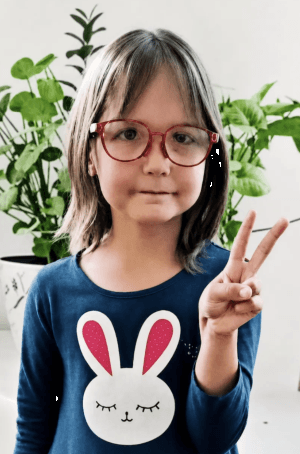
Lily (6) is also described as friendly and one who likes to help others. She has delays in her fine motor skills, though improving, and her speech development. She is receiving therapy for both. Lily is a hyperactive child who has recently started taking medication and it seems to be helping, especially with her night movements which have included head banging which has significantly decreased. She lives to sing and dance as well as draw.
Pia (5) is described as a friendly, kind-hearted and playful child who expresses her emotions readily. However, while she shares her emotions readily, sometimes she has difficulty controlling her emotions and is in therapy to assist her with this—yet it is reported that temper tantrums are not frequent and she is able to regain emotional regulation quickly. She has age appropriate gross and fine motor skills as well as speech development. She loves to sing and dance.
The girls are listed for adoption together. Their older sister, Winnie, is also available for adoption (but separately). The agency is hoping to find two families, so the girls can maintain contact.

Winnie has two sisters who are also available for adoption, but separately from Winnie. The agency is hoping to find two families, so the girls can stay in touch.

Developmental Evaluation: mild to moderate delays in the gross motor, fine motor-adaptive, language and personal– social skills
The agency has pictures available for seriously inquiring families — Kevin is ADORABLE!
Kevin is an adorable and friendly boy who can confidently play with familiar children the neighborhood. Kevin hums when he hears music or when he is watching television. He enjoys watching nursery rhymes on YouTube. Kevin is diagnosed with autism and with global developmental delays that include language and cognitive impairments. He also has microcephaly and an absent sagittal suture. Kevin has mild to moderate gross motor, fine motor (adaptive), language, and social skills. We’re hoping there is a special family out there for this precious boy! Could that family be yours?

Sophie loves people. She can be easily comforted by hugging, gentle stroke, and comforting words. Sophie expresses herself nonverbally. She nods or smiles when she likes something, and pouts or frowns when she does not. She joyously participates in the activities the caregivers and teachers give her such as sunbathing outside and sensory activities. Her caregivers and teachers report that she is easy to care for and manage because of her calm nature and generally stable health condition. She also adjusts to changes quickly and easily.
It is believed Sophie will continue to make progress in reaching her potential within a loving and caring family. Due to the unique child/family matching system in her country, a family with a current home study for any country can submit to be considered to become her family.


Pah is a lovely little 4-year-old boy in need of a permanent home. He has been with his foster family since he a little baby. He is bonded to his foster family as well as another foster child in the home who is 3 months younger than him.
Pah currently is in good normal health. However, when Pah was 22 days old he showed peripheral pulmonary artery stenosis, small patent foramen ovale (PFO), and secundum atrial septic defect 1.5 mm. On the follow-up echocardiogram in April 2022, the results showed normal heart anatomy and function. As of his August 2024 child checkup, his hearing and vision were reported to be normal. While Pah’s physical health remains good, he has been diagnosed with Autism Spectrum Disorder (ASD) in August 2023, for which he attends Child and Adolescent Psychiatry therapy. During the same evaluation, he was assessed to have a mild delay in gross motor skills as well as a mild delay in oral language. He had been previously diagnosed in 2022 with Borderline Developmental Delay. As observed, he can speak clearly, except that he may mispronounce some words. He is able to hold conversations with adults and express his needs and feelings in sentences. He can also follow instructions. Pah receives speech therapy about 2 times per month, and physiotherapy and occupational therapy 3-4 times per year at school. Pah can walk and run confidently. He can jump forward 12inches with both feet, stand on one leg, walk upstairs and downstairs with alternative feet by holding onto the handrail, throw and catch a ball, and kick a ball forward 5 feet away. He can also climb up the rope net. In terms of fine motor skills, Pah can build a tower of 9 blocks, remove bottle caps, hold a pen to draw, turn pages one by one, and thread beads.
Pah is described as a happy, outgoing but also stubborn child who has shown improvements in his emotional expression. He has become more accepting of reasoning as he gets older. Due to his ASD features, Pah has a set way of doing things. He also tends to cry easily over trivial things such as when he cannot find a toy or complete a task on his own. Pah shares a normal relationship with the other foster child in the home. They have typical sibling-like rivalries and will sometimes fight over toys. He shares a close relationship with the foster mother and accepts her guidance and follows her instructions. Overall, Pah is generally an easy child to take care of. He is well-behaved and manageable most of the time except that he tends to cry easily and can also be quite stubborn at times.
Pah performs well in his self-care tasks. Being able to drink from a cup and a straw, he can feed himself with spoon and a fork. He can wash and dry his hands with a towel; put on and take off his clothes, shoes and socks; brush his teeth and wash his face. He has finished toilet training and does not need to wear diapers. He can go to the toilet by himself. He only needs assistance in bathing, washing his hair and cleaning after a bowel movement.
Pah is attending pre-kindergarten at a nursery school. As described by the teacher, Pah has some close friends at school and enjoys a satisfactory relationship with his teachers. He can follow school rules and routines. Being attentive in class, he enjoys participating indifferent activities. As described, Pah is sometimes sensitive to the teacher’s reminders and sometimes is emotional about this. Pah knows lots of colors, shapes, fruits, animals, food and body parts. He also knows some concepts such as “big-small,” “up-down,” etc. He can recite the numbers from 1 to 50 and recognize some letters and numbers. He can tell others his name and age.
Families with a home study prepared for any international country can submit for consideration of Pah. The agency program specialist can explain the child/family matching process in his country.

Hope is a bright, assertive, and courageous girl with many endearing qualities and undiscovered traits. She is highly active and enjoys a range of sports activities, including running, swimming, and hiking. In her spare time, she loves engaging in craft work like origami. Her recent obsession with Sudoku has highlighted her strong logical thinking skills.
Despite facing challenges such as eczema, ADHD, and ODD, Hope is managing with her prescribed care routine. She thrives better with individual attention and consistent, firm, yet gentle care. She has shown significant improvement since being moved from an orphanage to her current foster home where she is adhering to rules and routines, and slowly learning how to live in a family atmosphere.
Hope was previously approved for adoption overseas. However, due to concerns the family had regarding her psychological/mental health once in-country, they withdrew their petition to adopt. A further report about Hope’s emotional development and readiness for adoption after the previous withdrawal will be ready by September.
Now, Hope is seeking a loving family who can provide the consistent, gentle care she needs to flourish. Hope’s institutional upbringing has shaped her attachment and emotional needs, but with the right support, she has the potential to thrive in a family environment. Given that adoptions from her country take approximately two years to complete, while Hope is entering her pre-teen years now it is important to realize she will be a teenager when adopted. Interested families need to be willing to learn and be well aware of the challenges of adopting an older child so her family will have the capacity to support her emotional and behavioral needs. It is also recommended that the family be well-equipped with trauma-informed care and understand issues related to delayed adolescence and the impact of long-term institutionalization. This includes understanding family roles, including those of a father and mother, and sibling relationships.
CHI has given this child the pseudo name Hope because we and her social service staff in HK believe that with the right family who understands her past and can provide her with and affection with proper rules and routines, Hope can overcome her difficult past and achieve great things. We look forward to finding a family that can offer her the stability and care she deserves. CHI has past child studies to provide to seriously interested families.

This is Jonathan! Jonathan is almost 4 years old, and we had the absolute pleasure of meeting him on our last visit to Taiwan. He is an active toddler who loves cars, balls, steering wheels, and toys that make sound and light up. He also adores toys that spin! While Jonathan is interested in meeting new people, he still maintains caution and will distinguish between familiar and unfamiliar people and surroundings. At this time, Jonathan prefers to play on his own, but will occasionally engage with peers when a friend is playing with a toy that Jonathan wants.
Jonathan attends school regularly, and positively interacts with his teachers. He follows instructions and participates in activities. Jonathan has made significant progress over the past eight months, with increased verbal expressions and connection with others. While he does primarily use non-word vocalizations to express himself, more recently he has correctly pronounced several words. Jonathan can accurately identify objects, and follow direction such as ‘go get your school bag.’
Jonathan has made great progress over the past year, and we know his progress would be even stronger with the love and support of a forever family!

Mia is a cheerful and smiley girl. She has been diagnosed with spastic diplegia, severe mental grade intellectual disability and Autism Spectrum Disorder (ASD) with no current medication needed. She is currently taking sleeping and vitamin supplements. Mia has divergent squint, hypertropia and astigmatism. She is recommended to wear glasses but she shows resistance as she does not like anything to be put on her face or head. Nevertheless, her vision seems not to be affected significantly during classes. Mia was assessed to have severe gross motor delay with dystonia but her walking was commented to become more stable.
Mia is currently attending a special school children with severe intellectual disability and multiple disabilities. She has made steady progress in her development and shown an interest in interacting with adults and peers. She is well loved by her school teachers and caregivers and is one of the brightest students in her special school. She enjoys listening to children’s songs, playing with spinning and musical toys, watching cartoons, playing with the swing during leisure time. Regarding her self-care skills, Mia needs assistance in teeth brushing and washing up and she does not like these tasks. She wears diapers all day long. She receives regular potty training and can urinate on the potty occasionally. She needs assistance in dressing but is able to take off her clothes, shoes and AFOs. She is also learning to put on her shirt when being prompted. She sits in a chair with a safety belt when her caregiver helps her to take a shower.

Liam was born December 2011. He was found to have multiple health and development issues, including a history of Infantile Spasm, left temporal arachnoid cyst, severe low vision, and moderate to severe grade mental retardation. He received training from different therapists and maintained steady improvement all along. Although he has a history of Infantile Spasm, he has a stable health condition with no records of any epileptic attacks since his admission to the present school. Due to his parents’ inability to take care of him, he was placed in a orphanage at the age of 3.
Liam is observed to be a lovely, easygoing, and well-behaved child, who is well loved by his teachers and caregivers. He is described as a happy child with stable emotions, and expresses enjoyment through his lovely smile which is heart-melting. He enjoys one-on-one interaction with his main caregiver.

Ben is a determined and easy-going child despite his significant medical and developmental needs. He is described as having a gentle temperament and finds contentment in simple pleasures like listening to children’s songs, sleeping peacefully and engaging with his caregivers.
Ben has been diagnosed with Chromosome 2q deletion with developmental epileptic encephalopathy, and global developmental delay. His developmental age is estimated to be under 3 months. Ben also experiences visual impairment due to right eye congenital ptosis. While these conditions necessitate using a manual wheelchair and a gastrostomy feeding tube, they do not diminish his indomitable spirit. is a courageous fighter who has persistently strived for survival and shown constant improvement in his health. As of December 2023, he has successfully been weaned off oxygen therapy. Furthermore, the ward nurses report that Ben exhibits consistent progress in his motor development under the guidance of therapists. This highlights Ben’s progress in his development through appropriate stimulation. It is believed Ben will gain more opportunities to explore and develop his potential once he starts attending school. To learn more about Chromosome 2q deletion, here is one of many articles available online: GARD Rare Disease Information – Chromosome 2q deletion – National Organization for Rare Disorders (rarediseases.org)
With a loving, committed family who is open to acquiring the necessary medical knowledge, his care staff believes that Ben will receive the support he needs to continue flourishing. Ben’s gentle nature, resilience, and evident potential make him a truly special child deserving of a forever home filled with unconditional love. While some development is expected, Ben will need lifelong care from his loved ones.
A family with a home study for any country can submit for consideration of this child. If matched, the family would need to update their home study to this specific country.

Hailey is able to communicate easily and freely. She is described as outgoing, expressive and a frank teenager with a kind heart. She loves to share her thoughts and feelings to those around her. She seems to be a sensitive soul as her emotions are quite easy to read on her face and admonishing her in public, she becomes defensive or cries, but when spoken to in private she responds much more positively to constructive criticism.
In December 2023, Hailey allegedly had a suicide attempt after breaking up with her boyfriend. She was hospitalized for a few days, but was not prescribed any medication. She also was reported to be smoking, which she admitted to as a way of calming her mood, but she has responded very positively to the staff’s positive reinforcement means of handling this situation.
As with most teenagers these days, Hailey enjoys dancing, making dance videos with classmates, and watching videos on YouTube or TikTok. She is on the basketball team at school and also enjoys playing volleyball. She expresses admiration of her geography, computer and Chinese history teachers. Her social worker says “her smiles and laughter are contagious and powerful.” She enjoys the Korean Pop Culture music.
Due to the process in her country and her age, a family wishing to adopt her will need to work quickly to complete paperwork if the foreign agency in charge of their adoption chooses the family for the child.

The adoption agency has additional photos and videos available.

She has regular evaluation with a developmental pediatrician and regular check-ups with pediatric neurologist, ped gastro enterologist and nutrition specialist. She regularly attends physical and occupational therapy once a week and homebased therapy is continuously being provided by the houseparent as per instruction from the therapist.
There is a $500 agency fee reduction for Serene’s adoption with the listing adoption agency. Additional agency fees may be available with that agency, based on the adoptive family’s circumstances.
Serene needs a family with an approved home study to be able to adopt her.


Samuel is an energetic and strong willed 5 year old boy who loves outdoor activities, playing with robots, puzzles and watching movies! Samuel said he would like to become a policeman when he grows up.
Samuel is not shy! He enjoys interacting with new people and likes playing in groups. His foster father said Sable “feels especially loved when there are more people interacting with him.”
Samuel resides in a foster home and has a 2 year old foster sister. He has a close bond with his foster parents and often expresses his affection to them.
Samuel has developmental delays and suspected ADHD. He attends occupational and speech therapy. During a recent visit with his social worker, he demonstrated his ability to string beads together, stack blocks and draw with a pencil. His articulation and pronunciation have improved, and he is able to clearly express himself. Sable also attends group therapy to help improve his interpersonal skills.

Jorrell favorites include playing with building blocks, toy cars, and reading storybooks – especially fairy tales and detective stories! Jorrell is inquisitive and loves to explorer.
Jorrell lives in a children’s home with 9 other children of similar age. He attends elementary school and is an eager learner. Jorrell is a helper by nature, and is one of the first to volunteer to assist his teacher and always wants to take care of younger children that he lives with.
Jorrell has a diagnosis of suspected absence seizures and suspected Tourette Syndrome, with developmental delays.

Kent did pretty well on the tasks that we asked him to do, including tossing a ball, standing on one foot, drawing a person and putting 6 step sequencing cards in order. When we asked him if he could add 2 + 3, he responded to the social worker “No, because I don’t speak English!” Okay, smarty-pants, you got us there!
He wasn’t up to answering most of our questions, but he after a while, Bill Porter got up and invited him to play. That’s when we finally saw what I think is the true Kent – he was suddenly full of energy and was clearly having a fun time! Kent is reported to have some developmental delays, and we have information about his time living with his birth family in his profile.
Update: april 2021
Kent’s personality truly shined when we met him in person, but this time he wasn’t as excited to participate in our fun games and activities virtually over Zoom. Kent is a shy boy, but we noticed that more during our recent visit with him. He did however tell us that he can ride a bicycle with only 2 wheels and showed us a dinosaur picture that he drew which was very impressive! Kent enjoys riding his bike and wants to learn how to roller skate next. Kent is friendly with other children at school and has good behavior reports from his teachers. He is able to follow rules, play well with others, shower and brush his own teeth, and much more. He tells his foster mother that he enjoys going to school and likes playing monkey bars on the playground. Like most 7-year-old boys, he loves being active! Kent is afraid of strangers and prefers to be accompanied by familiar people. Kent has been diagnosed with developmental delays, attends resource classes at school, and receives occupational and physical therapy once per week.

Jemma has a diagnosis of epilepsy, hypotension, cataracts, and has moderate developmental delays. Jemma attends special education classes and has a good relationship with her teacher. She can recognize several Chinese characters and can write her own name. She enjoys helping her teacher and receiving praise for her work. During the summer of 2021, Jemma participated in a 3 day camp. Her favorite activities were baking, sewing and physical games. By the end of her experience, she was able to share her feelings with a few words.

SEPTEMBER 2023 UPDATE:
Nolan can walk by himself. He enjoys walking around the center, engaging everyone, or just checking out what is happening around him. He enjoys morning and afternoon walks with his caregivers. He loves to look at himself in front of the mirror. He dances when he wants what he is watching while on the sofa. His caregivers assist and let him practice going up and down the stairs. There are times he prefers to be carried and hugged. He enjoys closeness and physical touch. He is sociable and plays on the trampoline with other children. Nolan pays attention to social stimulation and imitates some actions. He is currently attending occupational and speech therapies, which has greatly helped him improve his skills. He can now hold toys and put blocks on top of one another. Nolan likes everyone in the center and loves it when visitors come around. He does not display stranger anxiety. He still does not use words, but shows his excitement by laughing and shouting “ha ha ha” in a loud exaggerated voice similar to how Santa would say “Ho ho ho.” Nolan eats solid foods such as rice, meat, and vegetables that are cut into small pieces. He likes biscuits, yakult, plain bread, and yogurt as snacks. Nolan is becoming better at expressing what he wants. He points out stuff and says, “ah ah ah” when he wants to hold something. He is cooperative with his houseparents and caregivers during his morning and evening care routine when taking a bath and getting dressed. Nolan is loved by everyone at the child caring agency, but they are praying that he will be placed in a permanent family. He has a lot of unique needs that will require special attention, financial resources, good medical specialists, and commitment of parents. He might have delays in development, but having the presence of a loving family will be of great benefit to him in reaching his full potential. He shows signs of being able to learn and improve with dedicated staff taking one-on-one time with him each day. Nolan’s agency believes that he will bring so much joy to a family and he will teach them how to love deeply.
—————————————————————————
Nolan was found to have multiple congenital anomalies. Kleefstra Syndrome is to be considered. He was diagnosed as having global developmental delays and has mild hearing loss of the left ear and moderate hearing loss of the right ear. Nolan is being fed through a Percutaneous Endoscopic Gastrostomy (PEG) tube. However, his caregiver sometimes tries to feed him orally with infant cereal or yogurt, which he enjoys. Nolan is undergoing physical therapy and can pull himself up by holding the rails of his crib. He can sit by himself in his crib for a maximum of 30 minutes. He can stand with support and can move his legs freely. Nolan can walk approximately 100 steps with assistance. He can stretch his arms and hands to reach toys or any object near his crib. He loves playing with toys, such as rattles, that produce sound. Nolan responds when his name is called, and he can convey his needs through different tones when he cries or babbles. Nolan smiles, laughs, and babbles when talked to. He loves to be cuddled and played with! Despite his medical needs, Nolan is not demanding and is easy to care for.
A traveling family that met Nolan said, “We’ve met this child and he is the BEST cuddler! He hardly ever cries and loves to walk while holding your hands. He laughs hard when you talk loudly into his ear, and he loves cartoons that sing! We were with him for a whole summer and would be happy to share more info and pictures!”
We hope just the right family comes forward for Nolan!

Jesslyn needs parents who are comfortable with the many unknowns that are presented by her significant special needs. Jesslyn has epilepsy, hydrocephalus, global developmental delays, and vision concerns.


Joplin is an amazing 11 year old who is described as optimistic and persistent. He likes Legos and dinosaurs and plays basketball and occasionally hockey. His favorite subjects are Science and Mandarin. He has ADHD and is on medication to control it.
8 year old Jake is lively, cheerful, whimsical, laugh-loving, smart, and creative. Cars, building blocks, and drawing are among his favorite things to do. Jake also takes medication to help with his ADHD.
Jewel is a creative 6 year old who puts 50-60 piece puzzles together and likes building blocks. She is comfortable meeting new people and has a smile that will melt your heart!
Sweet Jillian is 4 years old and a total snugglebunny. She likes dress-up, listening to music, and dancing. She’s a great learner and has good oral expression.
Parenting a large family is a beautiful, rewarding, and sometimes messy challenge and these 4 siblings will need parents who can walk with them through the hard places they come from and help them reacclimate to living together again.

Those who know Joyce say she has a gentle personality. She likes to act cute and will become lively around familiar people. Joyce has a good relationship with her foster parents and gets excited when their 7 year old grandson visits on the weekend. They get along well and play with each other for hours.
Joyce presents with global delays and has Epilepsy and Thalassemia. It is suspected she has ADHD. Joyce attends OT and PT sessions. Joyce attends special education classes at elementary school and an afterschool class. She is making progress with her language skills and can respond to questions with single words.
Are you a family that can support Joyce with growing her language skills? Enjoy singing along to nursery rhymes with her?

Janet’s favorite activities include crafts, drawing, playing house, and outdoors activites such as basketball and riding her bicycle! Those who know Janet describe her as smart and straightforward. She will openly expresses her own thoughts and is strong-willed. Her caregivers say she does well in one-on-one interactions, and is making progress with peer social interactions.
Janet is going through the process of neurodevelopmental assessments for autism spectrum disorder, Tourette’s, and ADHD. She attends special education classes at her local elementary school and attends the afterschool program. She is an eager learner and enjoys going to school. Janet stated her favorite subjects are Mandarin, Life Curriculum, drawing and PE. Janet has 5 good friends at school, and they LOVE playing hide and seek at recess together!
Janet needs someone who is patient and can give her encouragement and clear boundaries. I

Nathan is a second grader in elementary school. His teacher stated he is considerate and gets along well with his peers. Nathan receives one-on-one tutoring to help him with his homework, and he is taking additional one-on-one language lessons with his teacher at school.
Naomi’s favorite activities include listening to stories, playing games, playing with toy cars, running and jumping rope. Those who know Naomi describe her as shy at first and takes time when she is getting to know someone new. Once she has built a relationship with someone, she is friendly and enjoys interacting with them.
Naomi is receiving occupational therapy for fine motor delays and speech therapy for her language delays. Her speech therapist mentioned she has made vast improvements on pronunciation since starting therapy. At school her teacher has Naomi read passages aloud from her textbook to help strengthen her pronunciation of words.
Naomi is a first grader in elementary school. Her teacher stated she has good learning skills, and she gets along well with her peers.
Nathan and Naomi live at the same children’s home, where they are able to continue to have a close relationship. Nathan shares a room with 3 other boys between the ages of 6-12 years old, and Naomi shares a room with 3 other girls between the ages of 6-11 years old.
Are you a family that can give the necessary time to build a trusting bond with Naomi? Give Nathan one-on-one time to help him focus on tasks at hand?

Janice enjoys outdoor activities, especially riding her tricycle, sliding down the slide in the neighborhood park and bouncing around a basketball. When she isn’t participating in a physical activity, Janice likes reading books and singing nursery rhymes with “Twinkle, Twinkle, Little Star,” and “The Butterflies are so Beautiful” being her favorites!
Janice is shy around strangers, but interacts with them once she becomes familiar. Janice acts affectionately towards people she is familiar with and asks for cuddles. Janice has a close bond with her foster family and likes to seek their affection.
Janice has a Cerebral Palsy diagnosis with moderate cognitive and motor skills delays. She currently attends physical, occupational and speech therapies. Janice has made good progress, and she is now able to climb stairs, jump on the ground 10 times in a row, and complete a 4 piece puzzle! At home, Janice will imitate her foster mother’s speech and ask questions.
Could you imagine pushing Janice on the swings at your neighborhood park or teaching her how to ride a bicycle? If you think you could be the right family for her, don’t hesitate to reach out

Jianna’s favorite activity is singing and preforming on stage at church. She has a good sense of rhythm, and she can hum the melody of songs she’s only listened to once or twice! When Jianna isn’t performing, she enjoys riding her bicycle and watching Sailor Moon. Those who know Jianna describe her as friendly and say she LOVES to laugh!
Jianna has moderate cognitive, speech, and motor delays. She currently attends occupational, speech and physical therapy weekly. Jianna is enrolled in elementary school and attends special education classes. Her teacher noted she is able to identify colors, identify objects and their names, and speak in short sentences.
Could you imagine yourself dancing and singing karaoke with Jianna? If you think you could be the right family for her, don’t hesitate to reach out!

Update 2022:
Natala participated in our February 2022 Virtual Superkids trip. She was 2 1/2 years old during the visit. Natala is a special girl who will require lifelong care by her adoptive parents.
Natala expresses her joy through smiling and laughing. She enjoys toys that make sounds and lights up when playing with dolls. She expresses sadness through crying. Natala has global delays in development and non-verbal. She is most comforted and connected to her foster mother.

Update May 2022:
Kellet was seen as a part of virtual SuperKids in February 2022. Kellet recently turned 7! Kellet is in first grade and his favorite subject is Math! He is doing well in school and enjoys his friend group. His social worker shares that she is impressed by his patience and involvement with activities during their time together.
Kellet shows his imagination through art and storytelling as he recently drew a picture for his best friend, who is a mermaid and lives in the sea! Kellet expressed a desire to also be a mermaid, so he can be with her all the time! How sweet is that?! Kellet enjoys imaginary play through dress up with peers and enjoys playing with Legos. Kellet is enthusiastic about life, playing games, and has a high level of attentiveness. He lives in an area where he is able to hike and run in the outdoors- activities that he appears to enjoy!
Kellet has foster siblings. When they are available, Kellet enjoys spending time with them.

Meet Jolie! Jolie enjoys walks with her caregiver. Her favorite part of their walk is when her caregiver speeds up pushing her stroller, and Jolie giggles with joy! Jolie loves being embraced by her caregivers and communicates with them through giggles and cooing.
Jolie has a diagnosis of epilepsy, cerebral palsy, hearing loss, low vision, and overall global delays. Jolie continues to make progress in physical therapy, occupational therapy and speech therapy, which she attends once a week. Jolie recently accomplished being able to turn her body over from her back to her side!
Jolie needs a loving, patient, and caring family who will be able to provide lifelong care and help her develop to her full potential.

Myles diet consists of mashed foods, his favorite being fruits. Myles spends most of his time in his bed or in a support chair. Because he is only allotted one therapeutic device per year, he doesn’t currently have a child walker. With more opportunities to put weight on his legs, he may possibly have the potential for assisted walking in the future.
Myles was born prematurely and has been diagnosed with global developmental delays, cerebral palsy, epilepsy, hydrocephalus and hearing impairment. Myles resides in a nursing home and receives 30 minutes of occupational and physical therapy at a local hospital each week. The agency has much more information on Myles! Could your family be the one he needs?

When she was 4 years old, she was placed with a local family for the purpose of adoption. She lived with that family for 17 months. The family chose not to finalize the adoption. Taylor was placed in an emergency foster placement for 7 months and then moved into a permanent foster home, where she currently resides.
The previous foster family described her as “a happy and outgoing child who has a very good memory”. Her current foster parents describe her as “talkative, happy and polite”. She seeks out interactions with others. She can play alone appropriately, but prefers to play with other people. She is willing to share her toys. Her gross and fine motor skills are at the appropriate developmental level for her age. She talks in complete sentences and can answer questions and follow verbal instructions. She is diagnosed with ADD and has difficulty staying focused on activities, especially when required to sit still for longer periods of time. She will also “push the boundaries” to see what she can get away with. If she does not get her way, she will throw a “tantrum” to see if the adult will give in.
She is showing signs of the effects of the placement transitions that she has experienced in her young life. She often asks for permission to do even the smallest things. She worries that she is in trouble. The foster family reports that she says she wants to be good. She is seeing a clinical psychologist, who has begun preparing her for a permanent adoption placement. Interest families should be knowledgeable of the effects of trauma and disruption or be willing to obtain continual education on the topic during the adoption process.

A traveling family met Simon and said, “Within the three days we spent at the orphanage, we were able to bond with him to the point he would smile and get excited when he saw us. The older girls told us he can understand what they say to him. He enjoys being held and carried around, but spends most of his day sitting in a baby walker or high chair. He seems very easy going, as we didn’t see him complain about being put in his crib for nap time, etc. The caregivers are working on his motor skills. He can eat with assistance and enjoyed the ice cream we brought! It’s so easy to fall in love with this little boy! We are praying his family sees him soon!”
Simon has spastic quadriplegic cerebral palsy and has had seizures. He takes 30 mg of Phenobarbital once a day. Simon has mild hearing loss of the left ear. Therapy has helped lessen the spasm and Simon can open and close his hands. Simon loves being around people and making faces! When praying before meals, he bows down his head and says “ahh” when everyone says “Amen.” We’re hoping a wonderful loving family comes forward for this special little boy! There is a $500 agency grant for Simon’s adoption with his adoption agency.

Talbot was diagnosed at a few months of age as having feeding issues, failure to thrive, left congenital ptosis, laryngomalacia and supraglotoplasty. According to a October 2011 developmental report, he was delayed in cognition, language, & gross and fine motor skills. He attends weekly occupational and language therapy classes, showing improvement in the past few months. He is able to walk on his own and at the time of the assessment, he was working on climbing stairs. His appetite has picked up and he enjoys eating noodles and biscuits among other foods.
Talbot will do well in a family who is patient, has time to work on developmental growth through play and exploration, and able to access early intervention services.