Teressa #


Information is from September 2024
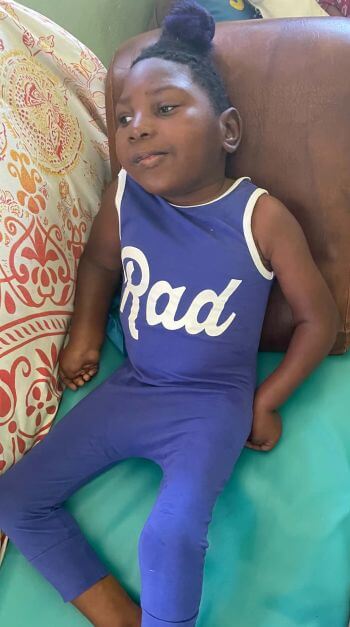
Summary: Yessica is a 7-year-old girl who has faced significant instability in her early life. She was abandoned by her biological parents, and then she lived with her grandfather until 2023, when he could not longer care for her needs.
Yessica has specific medical needs, particularly concerning her vision and behavioral health, both of which require consistent management. Yenci has complex visual diagnoses including low vision, bilateral amblyopia, astigmatism, hypermetropia, secondary exotropia, and nystagmus (irregular eye movements) with a rotational component. She underwent surgery for strabismus around April 2024 and currently wears corrective lenses. She has been diagnosed with behavioral disorder. She takes daily medication for her latter diagnosis. Her weight and height are appropriate for her age. She has received dental treatment for cavities and is in good oral health.
Yessica is currently enrolled in the second grade. She has experienced difficulties with academic performance, including low grades and failing subjects, largely due to challenges with concentration and understanding tasks. She struggles particularly with Language but shows aptitude in math, art, and religion. With increased support at home, her interest in studying is improving. Yessica demonstrates clear language use with coherent content and age-appropriate vocabulary. Her thinking is flexible, allowing her to identify risks and consequences. She is also advancing in reading comprehension. She has adequate fine and gross motor function, showing good coordination and manipulation skills.
Yessica is an affectionate child who is learning to navigate her emotions with professional support. She is currently going to psychiatry and psychology therapy to address behavioral difficulties. She needs support managing frustration and developing assertive responses. She can be impulsive (accelerated behavior), has difficulty staying still, and may struggle with following institutional rules, occasionally displaying rebellious or defiant behavior. Yessica is capable of giving and receiving affection. While she can be jealous with significant figures, she is responsive to dialogue and understands situations after discussion. She has developed skills to express her emotions, needs, and desires more clearly. She can lose motivation easily but is capable of regaining it through encouragement and dialogue.
Yessica has distinct preferences that give insight into her personality and what she hopes for in a family. She enjoys playing with dolls and has a fondness for dresses and shoes. Yessica has expressed a preference for adoption by a nuclear family (mom and dad) or a single-parent maternal family. She is indifferent as to whether the family already has other children. Despite her challenges, she shows a willingness to connect and has a preference for feminine figures, though she is open to a nuclear family structure. A balance of clear, consistent rules with warm affection is crucial to help her feel secure and manage her conduct disorder.

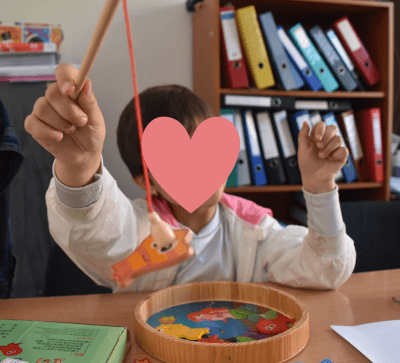
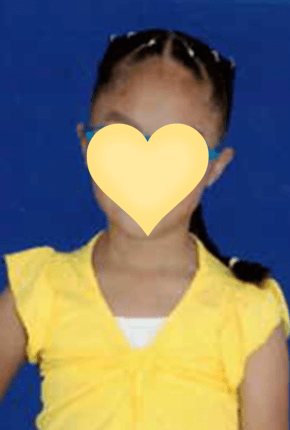
Kalin came into care as a baby when his mother brought him to the hospital and it was discovered he was in poor condition. He had a high fever, was malnourished, had a diaper rash and was noted to have overall developmental delay as well as cataracts. His mother was an older teenager and she had not sought any care for the medical condition he had had at birth. Kalin was 5 years, 8 months old at the time of this report from July 2024. Kalin´s current diagnoses are autism, unspecified asthma, congenital cataracts, and overall developmental delay. He takes daily medication. Kalin still wears diapers during the day and night.
Kalin is not formally enrolled in school. He has been diagnosed with autism and unspecified overall developmental delay. He currently goes to physical, occupational, speech, and psychological therapy. The psychiatrist recommended the foster mother take the child to school gradually. He goes to pre-k two days a week and for just a couple of hours. At first, he did not want to stay there but over time, the foster mother states that he is used to going to school and enjoys his time there. He loves toys that make different sounds, and he can play alone for more than 15 minutes.
There are no major concerns regarding Kalin´s gross motor skills, and he is still improving his fine motor skills. Since he is now used to wearing his glasses, this has helped him with his sense of feeling safe to perform different physical activities. He is starting to talk with some difficulties; however, through sounds and facial gestures, it is easy to understand what he wants. He has begun to imitate the sounds of some animals. Kalin is able to identify people´s emotions by looking at their facial expressions. He is able to give and receive affection with those he is familiar with, and he does not get jealous when his caregiver pays attention to other children. He is not shy—whenever he arrives at a new place, he explores his surroundings interacting with adults or kids. At times, Kalin gets anxious when he wants to play with something but needs to wait. Sometimes he gets upset when he is hungry and his food is not ready or he needs to wait for it to cool down. He is afraid of sudden loud noises.
Kalin enjoys playing with toys that make music. The child´s favorite food is spaghetti with chicken or ground beef. He is interested in musical instruments.


Please meet this cute boy named Bowie. He was diagnosed with congenital cataracts in both eyes. However he underwent surgical treatment with implantation of intraocular lenses. There is suspected Glaucoma. He is also diagnosed with Children’s cerebral palsy – Quadri pyramidal syndrome. Grand mal seizures with or without petit mal seizures.
Bowie can sit up independently from a lying position. He can stand up by holding on to various objects. He walks independently but it is uncoordinated. The child lags in neuropsychological development. He accepts bodily closeness with pleasure. It is pleasant for him to be held by an adult. The presence of children in his immediate space does not bother him, but he does not show interest in them and does not initiate interaction. He is soothed by riding in a pram or listening to favorite children’s songs. He prefers the environment to be quiet. He becomes nervous and anxious around loud noise. He is entirely dependent on the care of an adult.

Liamo was placed into protective care upon discharge from the hospital when he was born. At the time of his birth, he suffered severe asphyxia. His mother’s pregnancy was unplanned and she had not received any prenatal care. His parents were unable to grasp his medical diagnosis and condition, they were not in the position to care for his medical needs. No one in the biological family was able to care for him either.
Liamo is a child who needs constant supervision. His oxygen levels needed to be always monitored; however, oxygen support has been removed and he seems to have a better mood. He has not had any seizures but does have some spasms during the day. He cannot stay in a seated position. Despite his diagnosis, Liamo loves to receive affection. He communicates through babbling and other sounds. He needs support to fulfill all daily activities. He wakes up very early in the morning and is still not able to sleep throughout the night. Liamo wears diapers all day.
Liamo can kick his legs and with the help of external support equipment he can stay in a seated position for a period of time. His neck control is getting better, as he now can hold his head up for 40 to 50 seconds. He can grab objects with his hands without applying pressure. Liamo goes to occupational, physical, and speech therapy. He gets easily uncomfortable when he needs to wear more clothes, he prefers to wear very light clothes. He turns his head when he hears a strong noise. He takes daily medication. Liamo likes to change positions constantly and likes to participate in activities where there are sounds involved.

Sani is currently enrolled in the 4th grade. According to his teacher´s report, the child is loved by his classmates. He uses his cane to walk around and there are no major concerns regarding his motor, language, cognitive and social development taking into consideration his diagnoses of secondary vision loss and severe child abuse syndrome. He has great communication skills and can verbally expresses his feelings and emotions with people he is very familiar with. Sani recognizes authority figures, but many times has trouble being respectful and obedient, especially if he does not agree with an instruction given by them. Sani can easily make new friends and has leadership skills among his peers.
Sani goes to psychological therapy. He is still learning to take full responsibility for his consequences, and sometimes he lies to avoid any kind of discipline. Sani is learning to manage his impulses and frustration. If there is a situation that he cannot handle emotionally, he will start yelling or behaving in a hostile way with his peers. Whenever he throws a tantrum, he sometimes experiences psychomotor agitation and uses bad language. Whenever there are situations that make him feel anxious, he bites his sleeves, has sweaty hands or has motor restlessness. He gets upset when he needs to continue pushing to do his best in order to fully know the Braille system. He is afraid of being in a dark room alone. Because of his severe history of child abuse, it is recommended that Sani be the youngest child in the family though this may be negotiable depending on a family’s experience with children from abuse. Sani has expressed that he would like a family with two heterosexual parents and he would like to have siblings.
Sani likes to play soccer and enjoys building with Legos and also engaging in conversations with adults. He likes to listen to music in English or Portuguese since he has expressed his desire of learning new languages. Sani favorite colors are blue, white, black and orange. He loves to practice soccer, swimming, martial arts such as capoeira and riding his bicycle. He even likes to breakdance as evidence in a video sent with his profile. Sani is good at playing musical instruments. He would like to become a scientist, learn about biology and astronomy and also speak different languages.

Donna’s medical diagnosis includes: Retinopathy of prematurity (ROP) stage 5, post vitrectomy condition bilaterally; secondary glaucoma. Left eye ROP stage4 Nystagmus. Delayed neuro-psychic development. Condition after low birth weight. Self-aggression. Spastic quadriparesis. Iron deficiency anaemia
Dawn was born first. Her medical diagnosis includes: cerebral palsy – spastic quadriparesis. Spastic quadriparesis. Suspected hydrocephalus with normal pressure and hypoplasia of corpus callosum. Grade 1 hypotrophy. Convergent strabismus; hypermetropia. Condition following very low birth weight.
Update July 2024: After their placement into the foster home on May 14, 2024, the girls have adjusted well and made noticeable developmental progress. They show an attachment to the foster mom and follow her instructions. One of the girls can now walk independently and is well oriented in the foster home. The other girl sits with little support. The girls now eat mashed food from a fork or spoon and chew well. They have learned to speak their first meaningful words and are also observed to repeat syllables. While there’s some jealousy between the sisters when it comes to receiving attention, they are emotionally close and hug/hold hands. Videos from July 2024 show one girl as tenacious in exploring her environment and the other as joyful when playing on the floor. The girls attend therapy twice a week and their foster mom is proactive in seeking additional services for them. They like music and singing and enjoy massage from the foster mom. They are thrilled to be playing in the inflatable pool in the backyard. Their foster mom describes them as positive children who will continue to make progress with the right interventions and lots of love.
From a family who met them in 2023
I met these twins when I visited my daughter for trip one in 10/2023. One twin was active and was able to stand holding on and cruise around her crib. She was able to climb right out of her floor crib and back in herself. It was an activity for her and she did it with great ease. She wasn’t trying to escape at any point and would just flip In and out over and over again. She seemed like what you would expect for a toddler. She stopped what she was doing when someone called her name and turned in the direction of their voice. The other sweet twin was always laying down when I saw her. Sometimes in a crib, sometimes in a seat. My daughter asked for “baby” all the time and they would put this twin in her crib with her to lay together. They said she was more “severe”. She definitely seemed more infantile. They were in a really great place where they got plenty of food and were carried around a lot by the staff there. There were 8 kids on that floor in four rooms. The twins shared a room. I believe they are now in a foster situation. They def were pretty easygoing. They had a lot of musical toys which they seemed to like. The active twin kept herself busy a lot but the quiet twin seemed to love cuddling and other kids being around her. I think some of the delays they have may be related to vision impairments. I would imagine they would do well with siblings.

The agency staff member who met her during March of 2024, says the following: Nany likes music, and it seems to settle her down. She also likes being in the swing. At times she turned to various sounds. She can lift her head slightly while lying on her stomach. Nany is an extremely fragile, sweet and lovable little girl who needs lots of love, attention, understanding, support and lots of cuddles. Given the serious diagnoses, working with additional specialists definitely would ease and help the child’s condition. Nany is in need of a very prepared and supportive family.
Nany’s current adoption agency has grant funding is available for qualifying families.

Vincent was extremely calm during the whole visit. He sleeps in a small room, together with three other children with disabilities. He sleeps in a crib. He spends most of his time in his bed, being periodically put in a chaise lounge or in a car basket. He cannot sit upright, either independently, as well as with support. His position in the lounger/car seat is semi-recumbent.
Vincent predominantly uses his right hand and his body is almost constantly turned slightly to the right. He can turn from his back to one side and vice versa, he cannot turn on his stomach. When placed on his stomach, he cannot raise his head. Vincent is basically blind, according to the diagnosis and by a specialist, although the staff has doubts because the child often reacts to light. During my visit, when displaying and attempting to stimulate a reaction with a ball of light, no such reaction was observed.
Vincent showed interest in the new toys and especially in the noisy book which he grabbed with his right hand, held for a while and even waved it with his hand. As the teacher shared, he grabs like a crab, with pincers. The ball turned out to be too big for him to hold in one hand. Although the book was kind of prickly, Vincent did not react in any way, not even by pulling away.
A sharp noise does not startle Vincent, this was also evident from the sharp squealing from the side of the ball. He listens when there is music, and can show a slight liveliness/activity. He does not react to his name. He likes to be paid attention to, to be spoken to gently and to be hugged. He does not mind being touched … even from a stranger. Vincent’s entire care must be provided for by an adult. He is fed with a tube, being on 5 feedings per day. He doesn’t get angry or protest when changing or bathing. His sleep is peaceful.
From what I saw Vincent would be much better in a family environment. In the “home”, he mostly spends his time in his bed doing nothing and getting no attention. Every child deserves attention and love and stimulation. I really hope that this sweet boy will find his forever family soon!


He is a great eater with either blended or soft foods, but not great at drinking liquids. He has a lot of small seizures throughout the day, but is on the max amount of seizure medication that can be found consistently in his country.
In school and therapy he does a lot of sensory activities and is working on using his arms for purposeful movement. He has a stander that he likes to use while playing his toy piano. He doesn’t have an advanced way to communicate yet as he is blind and doesn’t have much purposeful movement but he does let us know when he is happy, mad, or would like something. He mostly only gets fussy sometimes at night time when he wants to be rocked to sleep, when he has to take baths, or when he thinks his food is too spicy.
Update July 2026:
Goliath is growing big and strong while he waits for his forever family. He is getting happier and more interactive in little ways unique to him all the time. Forever the baby of his house, he still loves all of the things mentioned in his previous update- with his all time favorites still being cuddles and jumping on the trampoline. He loves being included in everything and would thrive in a big or small family- around lots of chaos or enjoying soaking up all the cuddles by himself.
Goliath now has a g-tube but still eats small amounts by mouth for fun! Chocolate is his favorite. He is sleeping through the night more, and is very easily comforted when he is fussy.
At school, he is working on increasing his engagement with sensory activities and using his arms more purposefully during play and learning. He especially enjoys when his teachers help him paint or explore sensory materials such as shaving cream. His primary form of purposeful movement is kicking his legs when he knows someone is sitting beside him on the couch. He is quite strong and either manages to move himself a little bit when doing this or at least make the person sitting by him pay him lots of attention :).
He needs access to better medical care for his seizures as he is on the max amount of medication his country has available but still has many small (2-5 second) seizures per day.


VIDEOS:
https://vimeo.com/maaspecialkids/maa-salvador1
https://vimeo.com/maaspecialkids/maa-salvador2
https://vimeo.com/maaspecialkids/maa-salvador3
https://vimeo.com/maaspecialkids/maa-salvador4
https://vimeo.com/maaspecialkids/maa-salvador5
https://vimeo.com/maaspecialkids/maa-salvador6
https://vimeo.com/maaspecialkids/maa-salvador7
https://vimeo.com/maaspecialkids/maa-salvador8
https://vimeo.com/maaspecialkids/maa-salvador9
Password: Adoptmaa

He readily enters into play interactions with adults. He spontaneously pronounces syllables and other combinations of sounds. He eats well, with appetite. While bathed, he’s calm. His sleep is calm and long. He sucks his thumb while sleeping. He eats blended food from a spoon.