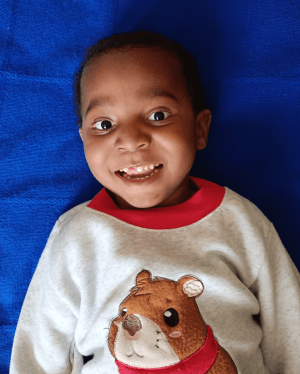
Jandron


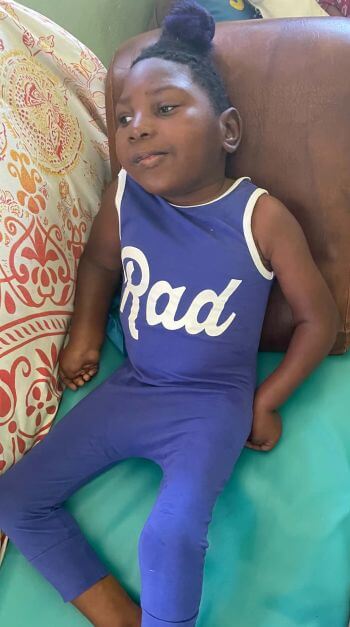
Yara’s spark and tenacity should be an inspiration to us all!
Yara came into protective care after her mother determined she did not have the resources or emotional support network to care for her daughter with complex special needs. She is a brave girl who navigates several neurological and physical health conditions. Yara was born following a normal pregnancy and delivery, but despite this fact, her diagnoses include right-sided spastic hemiplegic cerebral palsy, a congenital brain malformation, and focal epilepsy. Because of these conditions, she experiences some developmental delays. She also has visual impairments, including strabismus (both convergent and vertical), astigmatism, and amblyopia. Additionally, Yara has an expressive language disorder.
Despite these complex diagnoses, Yara is in excellent nutritional health. She maintains an adequate weight and height for her age. Her vaccination schedule is completely up to date, with her next boosters due when she turns five. She will require ongoing, comprehensive management by medical specialists to ensure her continued rehabilitation and health.
Yara shows incredible physical determination and a wonderful spirit of resilience. Anyone who hears of her diagnoses will be AMAZED by her gross motor skills. She moves independently from one place to another, runs, and even jumps on one or two feet. She can climb stairs easily, alternating her feet as she goes. Due to her right-sided hemiplegia, she experiences difficulties with fine motor skills in her right hand, particularly with gripping and using a pincer grasp. To help her improve, she currently attends physical and occupational therapy three times a week. Yara has an expressive language disorder, meaning she needs extra patience and support to help her communicate her thoughts and feelings. Her medical history impacts her overall developmental timeline. She benefits greatly from a structured environment and dedicated therapies that help her build daily living skills at her own pace.
Yara is a child who demonstrates quiet strength every day. Through her intensive physical and occupational therapies, she shows a remarkable willingness to try hard and push through challenges. While she navigates a world that can sometimes be physically and communicatively frustrating, she responds beautifully to patience and gentle guidance. She needs parents who can offer a deeply secure attachment style, providing her with the emotional safety required to process her feelings and build her confidence. With a predictable routine and a supportive home, Yara has the foundation she needs to develop healthy coping mechanisms and emotional regulation.
Yara is an active girl who loves to use her body to explore the world. Because she enjoys running, jumping, and moving around independently, she will thrive in a home with safe, open spaces to play.

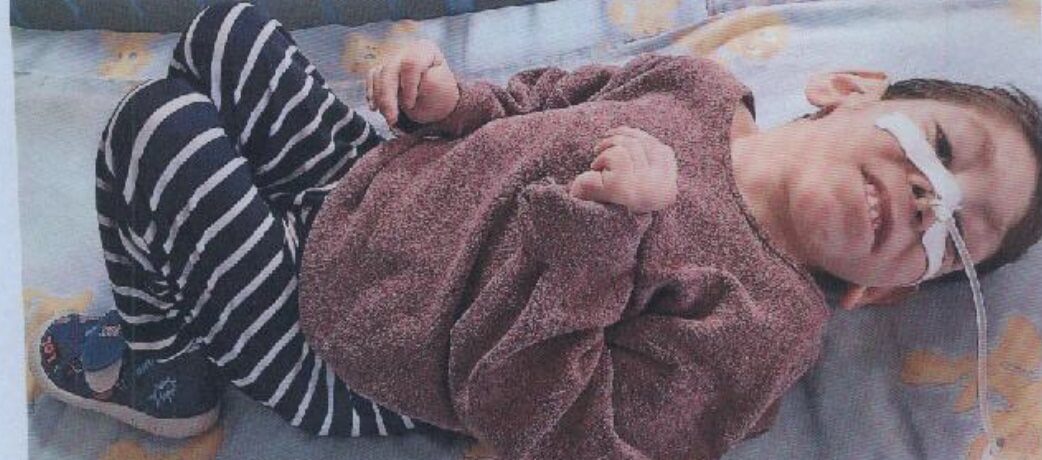
Rowand remains in a lying position and is motor-passive. He tolerates interactions – tactile, verbal, musical. He does not initiate interaction when he is awake but remains calm. The boy reacts by crying in moments of discomfort. He reacts to sounds and movement around him.
Rowand is fully dependent on the care of adults. He requires constant specialized care for feeding (via NG tube), body positioning, and systematic motor rehabilitation.

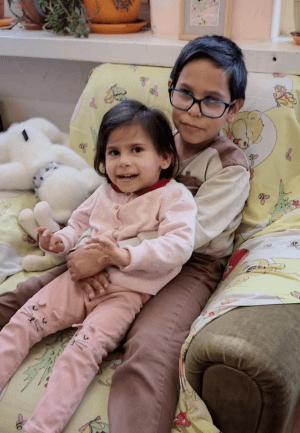
Sienna has a speech delay, although she has recently been eagerly repeating and saying words on her own. Some words are difficult to understand, but progress in speech development is evident. The girl also has difficulty understanding speech, but here too, progress is visible. She understands simple words, especially when they are supported by gestures. The girl can be engaged in a simple form of “dialogue” through play such as sharing toys. She is learning how to draw and eat independently using the spoon. She is able to pick up food cut into smaller pieces and put it in her mouth, although she does so slowly and uncertainly. She has difficulty biting off solid food and chewing it.
Sienna is a very cheerful and smiling child. She is speaking more and more – she can use many basic words, such as “give,” “more,” “come,” “yes,” “no,” “auntie,” and “hello.” She uses them in appropriate situations to express her needs and emotions. She recognizes various animals and can imitate most of their sounds.
Sienna to cuddle and read books. She participates enthusiastically in the group activities and enjoys walks. She responds to smiles, touch, and the voice of her caregivers. The girl has recently made significant progress in her emotional and social development. She is also able to initiate contact – she waves her hands in greeting, says “hello” in her own way, or responds with simple vocalizations. She is able to express her dissatisfaction, joy, or excitement and her progress is getting better and better in many areas.

Annie’s medical history includes a neurological condition with early-onset epilepsy (seizures are currently well controlled with medication), a syndrome of congenital anomalies with predominantly facial involvement, microcephaly, strabismus, and global developmental delays (neurological and psychological). She can stand with support but does not yet walk independently and has limited coordination. She loves interacting with caregivers and is a very sweet little girl.


Arlen and his four siblings came into care in 2022 due to being victims of multiple types of abuse in their family. Their parents were known to be drug users with emotional instability and aggressive behaviors between them. They were also verbally abusive toward the police and other authorities. Arlen is being placed for adoption as a single child.
As Arlen was never enrolled in school until he was taken into protective custody, he is in the first grade. He is familiar with some letters and numbers but cannot read or do simple arithmetic problems. He truly enjoys art class since he has great skills for doing crafts. He seeks adult validation in every activity he participates in. However, while he recognizes authority figures, he is defiant toward them and only obeys with some difficulty. Arlen usually gets along well with peers and adults; however, when he gets mad or frustrated, he begins to behave in a bad and aggressive way. He lies whenever he wants to avoid his responsibilities. He gets upset when he cannot do what he wants. His cognitive development is affected. Arlen has been diagnosed with ADHD, mild cognitive developmental delay, focalized epilepsy, and oppositional defiant disorder. He goes to occupational and psychiatric therapy, and also takes daily medication. There are no concerns regarding his motor and language development.
As mentioned, Arlen and his siblings were subjected to multiple types of abuse. It has been reported by his teachers that in addition to being aggressive toward other children in the class. Though Arlen can verbally express his feelings and emotions, he has a hard time managing them. He gets easily frustrated and has trouble finishing any given task. He is afraid of the dark and of being alone. Arlen gets anxious when he consumes sugary foods, and he also gets anxious when an outing is going to happen soon. He goes to bed around 8 pm but takes a long time to fall asleep.
Even though Arlen has been known to be aggressive toward others, his child study also reports he usually gets along with adults, peers, younger children and animals. Arlen is not shy when meeting people; it is easy for him to take the initiative to start a conversation with anybody. He likes to take the lead in any game. Arlen can be affectionate toward those he knows and is comfortable with. He likes to maintain good hygiene habits and takes care of his personal belongings.
Arlen is very active during the day. He loves to go to the park and to play soccer with friends. Arlen is interested in any outdoor recreational activity; he loves to do physical exercise. He has stated that he is good at swimming. Arlen has stated that he would love to get married and have kids. He does not want to go to college but would like to work handling heavy machines. He is open to being adopted by any type of family.


Hans was born to a young teenage girl who, tragically, had already given birth to a child at a very young age. Due to her chronological age and emotional immaturity the mother was not able to fully understand her responsibility, and despite the support of her family, the bond between Hans and his mother was not positive. After Protection Services became involved, it was evident that the biological mother and her family were not able to take care of the child due to his special needs, economic struggles and already caring for Hans’s older sibling. He, therefore, came into care at the age of 3 years old. There is no information about the biological father.
Hans is not enrolled in school due to his medical diagnoses. Hans loves to receive affection, and he responds through smiles. He is totally dependent on others to fulfill his daily routines. He communicates through guttural sounds, screams or by crying. Hans cries whenever his diaper is dirty. Hans´s gross and fine motor skills are not developed. The child cannot hold his head up, and he cannot crawl or walk. He has some body movements, and the foster mother has received training on how to stimulate his motor development. He does not like to be held and prefers when people change his body position without holding him for too long. Due to Hans’s medical diagnosis, he has a severe cognitive delay and is not able to interact with other children. Hans receives occupational, physical and speech therapy. Hans takes daily medication.
Hans likes to listen to soft music. He needs a family who can always take care of him due to the severity of his condition.

Update in 2025 states that she no longer has a feeding tube, and is doing really well!
Valeria was previously listed on Reece’s Rainbow as Marisol.

Dezi lived with his biological parents and older sibling until he was almost four years old. While his parents tried to take care of him, money was always lacking and ultimately, his parents knew they could not meet Dezi’s healthcare needs. In order for him to get all the help he needs and to have a better life, his parents relinquished him to protective care services in July 2022.
Due to the child´s medical diagnosis, he is not enrolled in school. There were two times were Dezi attended a special school, but his needs were much greater than what the teachers could manage. Dezi´s adjustment to a foster home was challenging but his current foster mother has done a great job with him. He has developed a strong bond with his foster mother and regulates his emotions in accordance with what she is doing or how close she is to him. He is now able to give and receive affection, which is a great achievement, and he even sometimes gets jealous when his foster mother pays attention to the other children. Dezi’s language is almost nonexistent, but he says a few words such as “ma.” He communicates mostly through facial gestures and by pointing at things he wants to grab or do. When Dezi gets upset, he cries and has “tantrums,” throws objects, and lays himself on the floor. Dezi is not comfortable being around people he is not familiar with. If he likes somebody, he will usually pull that person by the arm to start a game. Dezi likes to play with other children for short periods, and he is not aggressive towards them. He gets anxious when he is not familiar with an environment. He gets upset when he is not allowed to do something or eat at different moments throughout the day.
Dezi is very active, he changes from one activity to another in short periods, it is very hard for him to focus his attention on one specific thing. There are no concerns regarding his gross motor development, he is still working on his fine motor skills. He needs guidance and support to fulfill his daily routines though there are some activities that he can do on his own, such as eating with no help and dressing up. He sleeps throughout the night without any inconvenience. Dezi does not wear diapers during the day as he can go to the bathroom alone but needs help to clean himself up; he wears diapers during the night. He does not like animals.
Dezi’s favorite show is Paw Patrol. He gets happy when he gets new toys, especially cars even though toys do not usually last a long time because he plays roughly with them. He likes to wear clothes with Superman logos or drawings. Dezi has a good appetite and eats every kind of food. He likes to play with water.

Lilian is described as happy and communicative girl who is very creative. She interacts positively with adults and other children. She is currently in the fifth grade where she is known to be a good student.
Sonny is a quiet boy though he smiles and babbles to communicate with others. He is a quadriplegic child with cerebral palsy and epilepsy.
The agency can attempt to obtain additional information for interested families.

Information in this report is from March 2023 when Jana was 5. The adoption agency has medical records and pictures for Jana dating back to 2019.
Jana entered care at one year of age due to abandonment and negligence. Within her foster home, it is evident that Jana likes to interact with others. In her own special way, Jana is able to share and receive affection. She communicates with others through body language and eye movements. The foster mother has learned to read her body movements to identify if something is bothering her. Jana responds to stimuli generated through loud voices. Due to her medical diagnoses, she needs constant supervision and guidance to fulfill all her daily routines. Jana´s gross and fine motor development is delayed. Her cognitive development is severely damaged due to her medical diagnoses. She wears diapers all day. Jana spends her days seated in her wheelchair or laying down in her bed when she sleeps. She receives therapy and medication through her gastrostomy.
According to the foster mother, Jana loves to receive massages. She likes when people speak to her in a soft voice. Jana enjoys going outside for short periods.

Please meet this cute boy named Bowie. He was diagnosed with congenital cataracts in both eyes. However he underwent surgical treatment with implantation of intraocular lenses. There is suspected Glaucoma. He is also diagnosed with Children’s cerebral palsy – Quadri pyramidal syndrome. Grand mal seizures with or without petit mal seizures.
Bowie can sit up independently from a lying position. He can stand up by holding on to various objects. He walks independently but it is uncoordinated. The child lags in neuropsychological development. He accepts bodily closeness with pleasure. It is pleasant for him to be held by an adult. The presence of children in his immediate space does not bother him, but he does not show interest in them and does not initiate interaction. He is soothed by riding in a pram or listening to favorite children’s songs. He prefers the environment to be quiet. He becomes nervous and anxious around loud noise. He is entirely dependent on the care of an adult.

A therapist works with him weekly. He presents with many neuromuscular deficits that impact his ability to move his arms. He is able to move his left arm a little to touch objects; however, he does not pick up and hold objects yet. Movement is also limited in both legs, with his right leg having less mobility. He is unable to sit, stand or walk. He is able to hold his head up for short periods of time; however, he is making great progress with this. Wyatt is extremely motived during his therapy sessions.
Cognitively, he is extremely aware and currently does very well in school. He knows shapes, colors, some letters and numbers. He can identify them and answer questions using eye gaze with 2 choices. He loves to laugh at kids when they are running around. Sensory materials and adapted activities are helpful in school to further develop his academic abilities.

Liamo was placed into protective care upon discharge from the hospital when he was born. At the time of his birth, he suffered severe asphyxia. His mother’s pregnancy was unplanned and she had not received any prenatal care. His parents were unable to grasp his medical diagnosis and condition, they were not in the position to care for his medical needs. No one in the biological family was able to care for him either.
Liamo is a child who needs constant supervision. His oxygen levels needed to be always monitored; however, oxygen support has been removed and he seems to have a better mood. He has not had any seizures but does have some spasms during the day. He cannot stay in a seated position. Despite his diagnosis, Liamo loves to receive affection. He communicates through babbling and other sounds. He needs support to fulfill all daily activities. He wakes up very early in the morning and is still not able to sleep throughout the night. Liamo wears diapers all day.
Liamo can kick his legs and with the help of external support equipment he can stay in a seated position for a period of time. His neck control is getting better, as he now can hold his head up for 40 to 50 seconds. He can grab objects with his hands without applying pressure. Liamo goes to occupational, physical, and speech therapy. He gets easily uncomfortable when he needs to wear more clothes, he prefers to wear very light clothes. He turns his head when he hears a strong noise. He takes daily medication. Liamo likes to change positions constantly and likes to participate in activities where there are sounds involved.

A male child, born 2460 g., with a congenital genetic metabolic disease (pyruvate dehydrogenase deficiency), leading to a disorder in the absorption of sugars and carbohydrates. The child is on a strictly individual ketogenic diet (rich in fat and completely excluding carbohydrates). He is fed with special diet milk – Ketocal.
When conducting electroencephalography, epileptic activity was registered, which is why constant anticonvulsant therapy with Trileptal is being carried out. No epi-seizures have been observed after its initiation.
The child lags behind in physical, neuropsychiatric development and motor skills. He needs follow-up by a pediatric endocrinologist and dietician and a pediatric neurologist.
The boy has pronounced axial muscle hypotonia, hypertonia of the limbs. He sits up independently, but still does not stand up in the crib. He is placed in a walker and permanent rehabilitation is carried out. He is calm, does not isolate himself in the children’s group. He shows discontent when he does not like something, but quickly calms down. The child’s sleep is peaceful.
According to a Psychologist’s last Individual Characteristic from November 2024: “ …Over the past months, progress has been reported in the child’s general and fine motor skills. He stands up on his own on a stationary support and steps to the sides, holding on to the stationary support. The child moves by crawling. He can sit alone without support. He spends his waking hours with the other children in the group and he likes it very much, calm and smiling.
Jean-Luc is smiling, radiant, calm. He stands next to the children and does not isolate himself. There is no joint play yet. He cannot initiate contact with the children by himself. He shows dissatisfaction when he does not like something. He enjoys teasing from a familiar adult. During activities, he is involved, but is not active and shows little interest.

Nick is a very affectionate child who has bilateral hearing loss. While he has multiple diagnoses, he is able to attend school regularly and is in the second grade. Nick has adjusted well to school, his classmates, and teachers. Sometimes he gets easily distracted. He has constant support to improve his learning skills, especially his language development. Nick has trouble expressing his ideas, as his vocabulary needs to expand more and his reading comprehension is weak.
Nick is described as “so sweet and empathic that it is easy for him to interact with adults, peers, younger children, and animals.” He interacts positively with peers, makes eye contact, and loves to participate in games and activities with them. He is always willing to meet new people. Nick recognizes authority figures, and he is respectful and obedient towards them. There are no major concerns regarding his motor development, but it is important to mention that due to his medical diagnoses sometimes he can be perceived as clumsy. In the past 4 years, it has been noted that Nick gets anxious when he is not near his foster mother; however, he still is able to do all the things he is supposed to do.
As mentioned above, Nick has bilateral hearing loss, but is not deaf. He mainly communicates through facial gestures and guttural sounds. He can say and pronounce some words. He goes to special education sessions in order to improve his cognitive abilities. Sometimes Nick gets sad when his peers do not include him in an activity due to his language limitations. He is afraid of sudden loud noises and does not like when vehicles such as motorcycles are very loud. Nick has also been diagnosed with Localized Adenomegaly, Epilepsy, and related symptomatic epileptic syndromes with combined focal localization, Mitral Valve Insufficiency, moderate mental delay, and has an IQ of 40. He takes daily medication.
It makes Nick happy to be able to play with his foster siblings and to spend time with his foster mother. He also enjoys taking care of the household pets. Nick likes to sing, draw and paint. He is good at crafts and loves to play soccer in the park.
His listing agency has additional information and precious pictures of this child from when he was 3 years old! They will be happy to share this information with interested families!

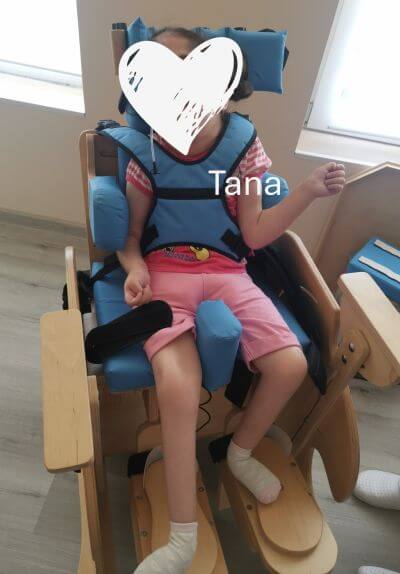
Phineas uses a wheelchair in his daily life. He also spends time in a standing frame. He enjoys smiling at people and laughing. Phineas enjoys sensory experiences with tactile or auditory input. He enjoys listening to a maraca or touching a soft stuffed animal.

Brenda (7) is known for her intelligence and autonomy. She learns easily and despite her young age, has great confidence in her abilities to perform any activity assigned to her. She seeks academic challenges and enjoys increasing her skills and knowledge. She is more selective with others although she is affectionate with her siblings. She likes to play individual games, loves to play to babies, draw, video games and coloring. Her favorite activity is playing soccer with her brother. She reflects a healthy emotional state. Brenda has a suitable academic performance and is in the first grade at a Montessori school. She presents a good state of health and is diagnosed with a history of trauma cranioencephalic without clinical repercussions with a history of violence family (Assessed by neurology with CT and EEG reporting normal).
Marcely (8) is described as in good health. She has favorable development in all areas. She is tender and collaborative with adults, she is also very active, and likes to keep moving, climbing, running, skating or cycling. She loves playing with dolls and coloring. Once her confidence is gained, she enjoys giving lots of hugs. She has built a healthy bond with her siblings which contributes to her self-esteem and feeling of protection. She is in the second grade and has an interest in learning and collaborating with adults. She has improved in her impulsivity control and emotional responses.
Jose (10) is intelligent, kind, friendly and bold and affectionate with adults and their colleagues. He has a protective attitude towards his sisters, shows them affection, but also seeks his own friends and does his activities independently. He has a leadership role with colleagues. He is competitive but also sensitive to needs and emotions of others. Jose shows emotional stability, establishes close and healthy social and emotional ties with peers and adults. His development is corresponding to his chronological age. He presents a state of good health and has a diagnosis of myopia and asthmatic which is being treated. He is in the 4th grade and interacts appropriately with his colleagues and guides.
Vanessa (11) has a calm temperament and has developed self-confidence and loving attitude towards her caregivers and siblings. She is very independent in her routine activities, helps younger children and assumes a role of caregiver. She enjoy activities like reading, coloring, making bracelets and playing with dolls. Vanessa is diagnosed with developmental delay psychomotor and speech disorders, ADHD, learning disorder, disorder secondary cognitive development, disorder specific pronunciation, delay expected physiological development for age and seasonal allergic rhinitis. Despite this, she maintains good health and doesn’t take medicine. She is in 5th grade and has established important emotional ties with her colleagues and friends.

Vance was also previously listed as Vinnie.

In therapy, she works on ways to improve her functional mobility, and increase the functional use of her arms. At school, she does a lot of sensory activities to work on ways to respond and communicate better and fixate her eyes on objects to learn.

He is a great eater with either blended or soft foods, but not great at drinking liquids. He has a lot of small seizures throughout the day, but is on the max amount of seizure medication that can be found consistently in his country.
In school and therapy he does a lot of sensory activities and is working on using his arms for purposeful movement. He has a stander that he likes to use while playing his toy piano. He doesn’t have an advanced way to communicate yet as he is blind and doesn’t have much purposeful movement but he does let us know when he is happy, mad, or would like something. He mostly only gets fussy sometimes at night time when he wants to be rocked to sleep, when he has to take baths, or when he thinks his food is too spicy.

VIDEOS:
https://vimeo.com/maaspecialkids/maa-rosita
https://vimeo.com/maaspecialkids/maa-rosita1
https://vimeo.com/maaspecialkids/maa-rosita02
Password: Adoptmaa
Agency fee reductions may be available based on the adoptive family’s circumstances.

https://vimeo.com/maaspecialkids/maa-alfie
Password: Adoptmaa
Agency fee reductions may be available based on the adoptive family’s circumstances.

Galen is an eight year old boy with Fetal Alcohol Syndrome, which has left him with some dysmorphic facial features and difficulties with problem solving. In difficult situations he resorts to verbal and physical aggression. He enjoys helping out with household activities, specifically in the kitchen. He is visually impaired and has mild intellectual disability. He has been receiving preschool education since last September. He works with a psychologist, speech therapist, and physiotherapist on a daily basis.
Galen enjoys participating in group activities, but he works better when one-on-one with a therapist. He is capable of focusing for long periods of time on a single activity. When something doesn’t go his way, he can get upset, but with the right motivation he can easily return to his activity. Galen can’t read, but he can distinguish single letters of the alphabet, and can even copy letters. He can count to twenty. In the future, more focus will be put toward improving his knowledge of the alphabet and helping him manage his emotions.

Jemma has a diagnosis of epilepsy, hypotension, cataracts, and has moderate developmental delays. Jemma attends special education classes and has a good relationship with her teacher. She can recognize several Chinese characters and can write her own name. She enjoys helping her teacher and receiving praise for her work. During the summer of 2021, Jemma participated in a 3 day camp. Her favorite activities were baking, sewing and physical games. By the end of her experience, she was able to share her feelings with a few words.

Password: Adoptmaa
There is a $500 agency fee reduction for Ariana’s adoption. Additional agency fee reductions may be available based on the adoptive family’s circumstances. If you are interested in reviewing Ariana’s file or in adopting Ariana, please contact the agency for additional information.

Jesslyn needs parents who are comfortable with the many unknowns that are presented by her significant special needs. Jesslyn has epilepsy, hydrocephalus, global developmental delays, and vision concerns.


There is a $500 agency fee reduction for Jay’s adoption with a specific adoption agency; additional agency fee reductions may be available based on the adoptive family’s circumstances.

Those who know Joyce say she has a gentle personality. She likes to act cute and will become lively around familiar people. Joyce has a good relationship with her foster parents and gets excited when their 7 year old grandson visits on the weekend. They get along well and play with each other for hours.
Joyce presents with global delays and has Epilepsy and Thalassemia. It is suspected she has ADHD. Joyce attends OT and PT sessions. Joyce attends special education classes at elementary school and an afterschool class. She is making progress with her language skills and can respond to questions with single words.
Are you a family that can support Joyce with growing her language skills? Enjoy singing along to nursery rhymes with her?

VIDEO: https://vimeo.com/maaspecialkids/maa-cale
Password: Adoptmaa

VIDEOS:
https://vimeo.com/maaspecialkids/maa-bailey001
https://vimeo.com/maaspecialkids/maa-bailey002
https://vimeo.com/maaspecialkids/maa-bailey003
https://vimeo.com/maaspecialkids/maa-bailey004
Password: Adoptmaa

VIDEO:
https://vimeo.com/maaspecialkids/maa-rowan01
Password: Adoptmaa

VIDEO:
https://vimeo.com/maaspecialkids/maa-brock
Password: Adoptmaa

The agency has additional medical information and videos available.


Update 2022:
Natala participated in our February 2022 Virtual Superkids trip. She was 2 1/2 years old during the visit. Natala is a special girl who will require lifelong care by her adoptive parents.
Natala expresses her joy through smiling and laughing. She enjoys toys that make sounds and lights up when playing with dolls. She expresses sadness through crying. Natala has global delays in development and non-verbal. She is most comforted and connected to her foster mother.


Meet Jolie! Jolie enjoys walks with her caregiver. Her favorite part of their walk is when her caregiver speeds up pushing her stroller, and Jolie giggles with joy! Jolie loves being embraced by her caregivers and communicates with them through giggles and cooing.
Jolie has a diagnosis of epilepsy, cerebral palsy, hearing loss, low vision, and overall global delays. Jolie continues to make progress in physical therapy, occupational therapy and speech therapy, which she attends once a week. Jolie recently accomplished being able to turn her body over from her back to her side!
Jolie needs a loving, patient, and caring family who will be able to provide lifelong care and help her develop to her full potential.

The agency staff member who visited her during March of 2024, says the following:
Emma is a sweet little girl who needs a loving and supportive family environment. During my brief visit, the child was constantly on the move except for the brief moments when she played with a particular toy or during her brief moments of protest. At the present time, the child’s needs are met at a basic level, with particular attention paid to her medical needs. The lack of systematic and in-depth work of specialists (such as a rehabilitator, occupational therapist, special pedagogue, speech therapist and others) is felt, which the institution currently does not have the opportunity to provide. By falling into a suitable loving family, receiving more attention and adequate care and activities, Emma could show her potential to a greater extent.
Update 8/2024

There are some difficulties in attracting and keeping his attention focused. Jonas plays for a longer period of time whenever he is interested in the respective activity. Jonas orientates well in a familiar environment. He distinguishes between day and night based on his everyday routines – sleeping, meal times, rest. He recognizes the neighborhood around the foster family’s home.
Jonas is reported to have achieved noticeable progress in terms of expressing his emotions and feelings, which are becoming more diverse. He reacts appropriately to smiles and angry faces and also to the tone of voice one talks to him with. He demonstrates his love, attachment and attention for others. He greatly enjoys it when others play with him. Jonas has attached to all members of the foster family.

Update 9/2024
Shay lives in a foster family and is very close to her foster mom. She says a lot of words and sentences, but they are in Turkish. She is extremely mobile and can run, climb on fitness equipment, go up and down stairs and can jump on one leg. She enjoys playing with dolls and pretending to cook. She likes nice clothes and likes to look good. She does not manifest any aggression and in fact is very loving and sweet. She is also very curious. A resource teacher works with Shay at school, and she also visits with a psychologist at the Community Support Center. Unfortunately she lives in a very small town with very few other resources. She really needs the love, attention and resources that only a family can give.

Original posting from 2017: Brogan is amiable, friendly, at times is too enthusiastic. He cooperates with others; participates in group activities; He shows that he is proud with his achievements; often searches for the approval of the adults and insist to make things independently. He likes role games and pretend games. Brogan easily memorizes and reproduces what he learned and his attention is more sustainable and focused. Because of that he is secure in his expressions and does undertake initiative in the learning process. He likes to impose his opinion in the game and to be a leading figure, but agrees with the opinion of the others as well. He willingly communicates with the others, without too much physical closeness, and seeks approval of his foster parent. His understanding corresponds to his age and environment. He is able to lead a dialogue with others and is empathetic towards others. When communicating with others he uses non-verbal methods as gestures and mimics for better communication. He has some vocabulary is working on that. He knows his first name and his age. He understands and uses the specifications for emotional states, features of the character, for himself and others as well. He loves to listen to tales or stories, expresses interest towards the pictures in the books. He can tell overall if he likes certain story or not. He has established perception of his body structure. He has developed feeling of good and evil. He has developed a sense of justice. He is more patient. He has vast desire to explore the world around him and is constantly asking questions until he receives a satisfactory answer. He demonstrates care for the others and his foster parent.
He loves to play with car toys, constructors, to listen to music and dance. He enjoys independent and group games with peers. He had surgery at 11 months old for inter-cranial trauma. He shows mild to moderate delays and occasional seizures if ill or upset.


Leonard is one of the most clever boys you could ever meet. Although he’s non-verbal in conversations he often sings his favorite songs out loud for everyone to hear. His favorite toys include tennis shoes, books, and anything that spins! He also loves any sort of sensory experience, such as playing in the dirt looking at moving lights, and swinging. Leonard is not difficult to please. He finds joy in all the small moments in life. His favorite days are water days. He could truly sit in the kiddie pools for hours! He loves splashing and experimenting with how the water moves. Leonard is so much fun to play with and be around.
Leonard is gaining more independence everyday. He can eat, walk, and use the bathroom on his own. He has many ways of communicating what he wants using gestures, verbal sounds, and expressions or body language. Leonard is almost never sad or unhappy. His laugh can be heard even in another room, his joy is truly contagious. When he gets to know you Leonard can be very affectionate. He loves to hold hands or lay in your lap. He might also take your hand to show you he wants his head or back rubbed. He knows how to seek out his favorite people, forming clear attachments to those he loves. Leonard would absolutely thrive with the consistency of a forever family who can love him fully and keep him safe always.